 E Paper
ISLAMABAD (Urdu Times) Faiz Hameed sentenced, a shining example of strict accountability in the army

Share
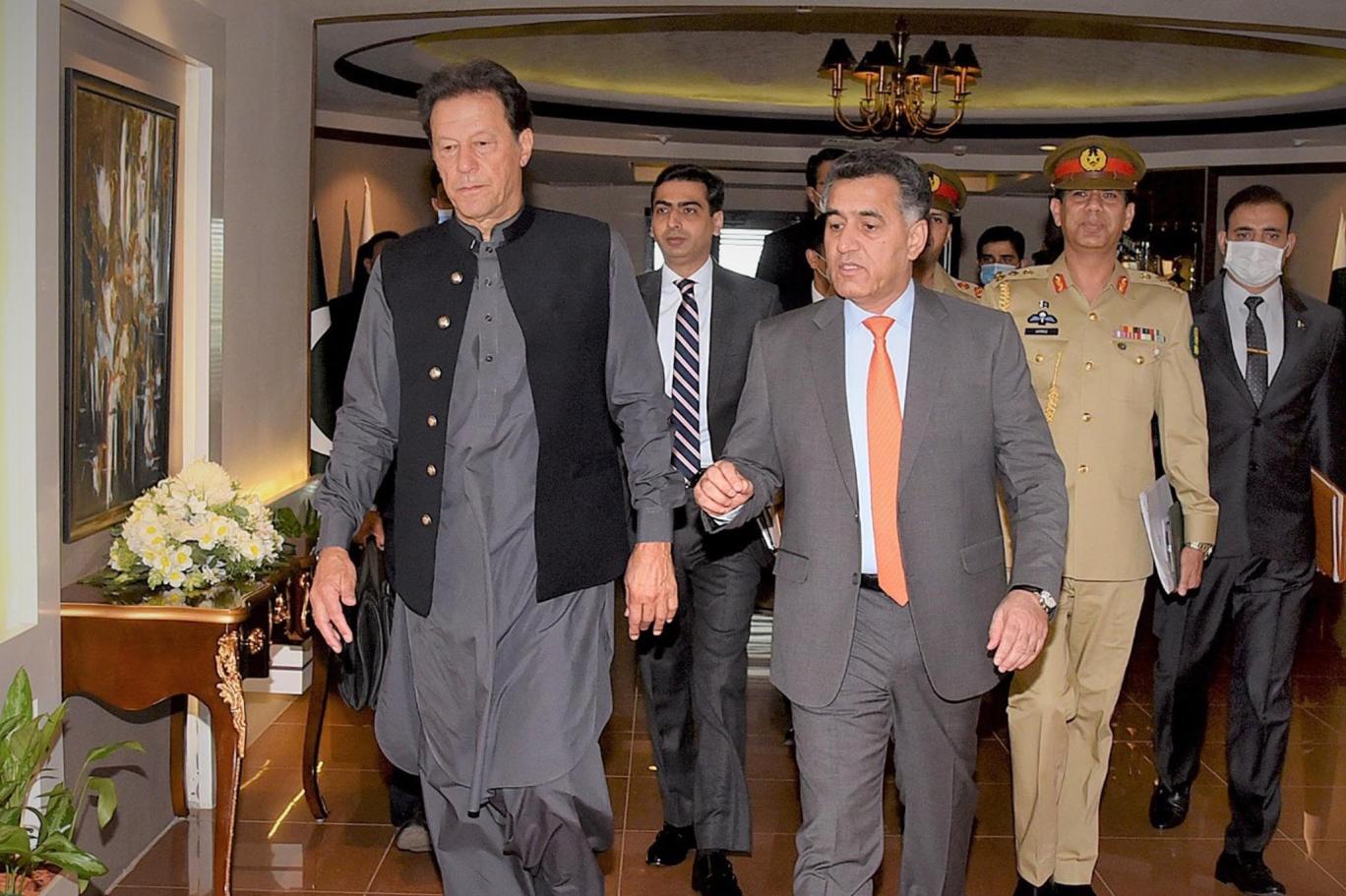
ISLAMABAD (Urdu Times) The sentence of a former army officer is a shining example of strict accountability in the Pakistan Army. Other courts in Pakistan should also learn from this that no one is above the law.
The Pakistan Army’s Public Relations Department (ISPR) has said that former DG ISI General Faiz Hameed has been sentenced to 14 years in prison with hard labor. According to a statement issued to the media: ‘On August 12, 2024, Mr. Faiz Hameed, who was a former Lieutenant General, was tried under the provisions of the Pakistan Army Act, which lasted 15 months.’ The accused was charged with four charges, which included involvement in political activities, violation of the Official Secrets Act that was detrimental to the security and interest of the state, misuse of authority and government resources, and causing wrongful harm to individuals. ‘After long and arduous legal proceedings, the accused was found guilty on all charges and the court sentenced him to 14 years rigorous imprisonment, which was issued on December 11, 2025. ‘The Field General Court Martial complied with all legal provisions. The accused was given all legal rights, including the right to a defense team of his choice. The accused has the right to appeal to the relevant forum.’ Faiz Hameed, a senior officer in the Pakistan Army and the head of the Pakistani Intelligence Agency (ISI), has been On December 10 last year, the Pakistan Army Public Relations Department had stated in a statement that ‘On August 12, 2024, Lt. General Faiz Hameed (R) was taken into custody while initiating the proceedings of the Field General Court Martial under the relevant provisions of the Pakistan Army Act, while in the next phase of the Field General Court Martial, Lt. General Faiz Hameed has been formally chargesheeted.’
 The statement said that ‘These charges include involvement in political activities, harming the security and interest of the state by violating the Official Secrets Act, misuse of powers and government resources, and causing undue harm to individuals.’ In addition, ‘a separate investigation is also being conducted regarding Faiz Hameed’s involvement in violent incidents related to chaos and unrest in the country during the Field General Court Martial process. Several incidents of violence and unrest are being investigated, including those related to May 9, while the intention and collusion of nefarious political elements in the violent incidents are also being investigated.’ According to the information, the method of Field General Court Martial in the army The case consists of three parts and in case of conviction, a competent authority decides on the punishment according to the rank of the officer. In this process, first a court of inquiry is held against any serving or retired officer. In the second part, a ‘summary of evidence’ is recorded and if there is evidence and the crime is proven, a field general court martial is held. It depends on the nature of the crime as to what punishment will be given to the officer. The punishments include withdrawal of rank, withdrawal of facilities, etc., as well as imprisonment with hard labor and death penalty. According to the ISPR, along with General Faiz, three more military officers were also taken into military custody. The arrested officers include two brigadiers: Brigadier (retired) Ghaffar, Brigadier (retired) Naeem and a Colonel Asim. All three officers worked as messengers. All three officers were involved in coordination between the political party and Lieutenant General (retired) Faiz Hameed. Both retired brigadiers belong to Chakwal and were special and favored officers of General Faiz who were also involved in political messaging and facilitation even after retirement. The DG ISPR has made a clear statement in a press conference on the strict accountability process in the army that ‘self-accountability in the army is a strict, strict, transparent and automatic process that continues all the time. The bigger the position, the bigger the responsibility.’It may be recalled that General Faiz Hameed’s name first came to the fore in 2017, when the religious political party Tehreek-e-Labbaik Pakistan (TLP) announced a nationwide protest and staged a sit-in at Islamabad’s Faizabad Interchange for several days. General Faiz Hameed played a key role in ending the TLP’s sit-in over the change in the wording of the oath regarding the finality of the Prophethood in the Election Bill 2017, due to which he remained in the news.
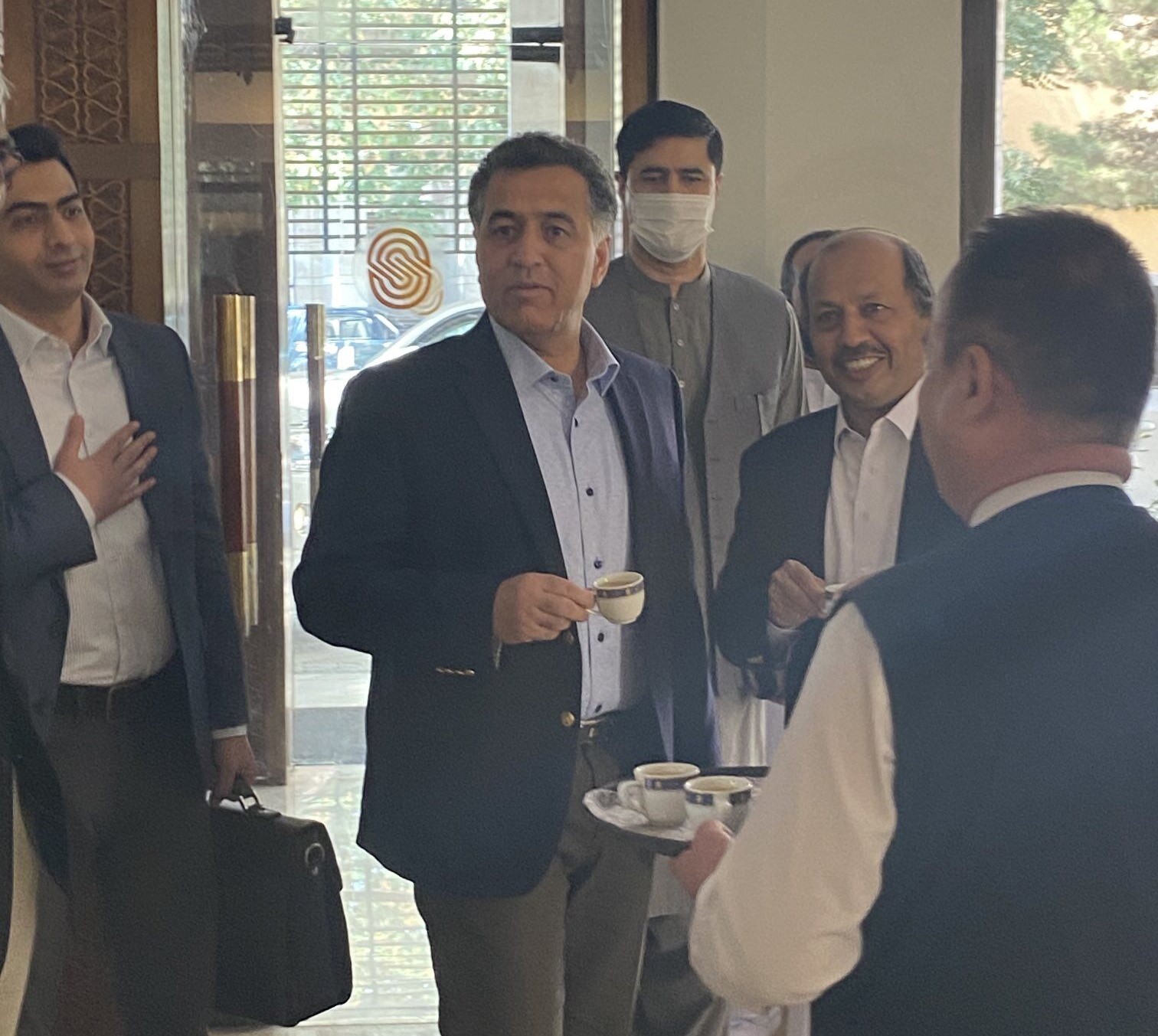
After being appointed as the head of the intelligence agency Inter-Services Intelligence (ISI) for the second time in 2019, he became the center of news in 2021 at the Serena Hotel in Kabul when his picture while drinking tea caught the attention of the international media.
Hailing from Chakwal district of Punjab province, Lieutenant General Faiz Hameed became part of the Baloch Regiment after passing out of the 76 Long Course in the army. He was posted as Corps Commander Peshawar in October 2021. Ten months later, he was posted as Corps Commander Bahawalpur. He had also held the post of Adjutant General at the General Headquarters (GHQ) as a Lieutenant General, while previously serving as Chief of Staff of Ten Corps in Rawalpindi, General Officer Commanding in Pannu Aqil, and DG Counter Intelligence (CI) Section in ISI.
But when Field Marshal Syed Asim Munir was named Army Chief in November 2022, he took early retirement. On November 8, 2023, the owner of the housing society Top City filed a petition in the Supreme Court, in which he accused General (retd) Faiz Hameed of misusing his powers. The petition alleged that on May 12, 2017, at the behest of General Faiz, ISI officials raided the house and office of the owner of the housing society and seized gold, diamonds and other valuables including money. Under the orders of the Supreme Court, the Pakistan Army had started holding a court of inquiry against Faiz Hameed in April 2024. In August 2024, a field general court martial was initiated against him and he was taken into custody. He was later formally chargesheeted.
The charges against him include involvement in political activities, harming the security and interest of the state by violating the Official Secrets Act, misuse of authority and government resources and causing undue harm to individuals. Apart from this, he was also involved in the investigation of the May 9 unrest.
It should be remembered that the field general court martial procedure in the army consists of three parts and in case of conviction, the competent authority decides the punishment according to the rank of the officer.
In this process, first a court of inquiry is held against any serving or retired officer. In the second part, a ‘summary of evidence’ is recorded and if there is evidence and evidence and the crime is proven, a field general court martial is held.
It depends on the nature of the crime as to what punishment will be given to the officer and the punishments include withdrawal of rank, withdrawal of facilities etc., in addition to imprisonment with hard labor and death penalty.
On Thursday (December 11, 2025), the Pakistan Army’s Public Relations Department (ISPR) announced the sentencing of General Faiz Hameed to 14 years of rigorous imprisonment.
He was charged with four charges, which included involvement in political activities, violation of the Official Secrets Act that was detrimental to the security and interest of the state, misuse of authority and government resources and causing wrongful harm to individuals.Faizabad sit-in; General Faiz Hameed’s name first came to the fore in 2017 and since then he has been in the news in one way or another. His role was important in ending the 20-day sit-in of Tehreek-e-Labbaik at Islamabad’s Faizabad Interchange. The sit-in, which lasted from November 5 to 26, 2017, ended after the protesters accepted their demands and the Law Minister resigned. Later, Tehreek-e-Labbaik chief Khadim Rizvi, in a statement to the media, said that he did not negotiate with any government figure or sign an agreement, but rather the negotiations were held with General Faiz and he was also the guarantor. Due to this agreement, he was severely criticized and the Supreme Court ordered the army to stay away from politics. But apart from politics, General Faiz Hameed’s big mistake as a professional spymaster came to light after the Afghan Taliban formed a second government in August 2021. Three weeks after the Taliban’s arrival, General Faiz Hameed’s photo with a coffee cup during a visit to Kabul went viral and drew heavy criticism. It was not liked within the army itself and somewhat reinforced the perception that Pakistan was the patron of the Taliban. He was the first high-ranking official to visit Kabul after the Taliban took over. Although the head of the US CIA had also visited Kabul before him, no one had seen him coming or going. After winning the 2018 elections, the Imran Khan government appointed Lieutenant General Faiz Hameed as the head of the intelligence agency ISI in 2019. He took over the post from the current army chief General Asim Munir. As the DISI chief, Faiz Hameed was considered very close to PTI chief Imran Khan. Some say that in fact, another former ISI chief, General Pasha, and General Faiz were the alleged architects of the PTI ‘project’. During the PML-N PTI regime, former DG ISI Faiz Hameed was also involved in jailing opponents, ensuring the attendance of members in assembly sessions for legislation and getting the budget approved. PTI rejects these allegations. In 2017 and 2018, former Islamabad High Court judge Shaukat Aziz Siddiqui and PEMRA chairman Absar Alam also accused him of interference. However, Faiz Hameed denied Shaukat Siddiqui’s allegations. Faiz Hameed was a retired three-star general of the Pakistan Army who was commissioned in the Baloch Regiment and served as GOC 16th Infantry Division Pannu Aqil. He was promoted to the rank of Lieutenant General in April 2019. Lieutenant General Faiz Hameed was appointed DG ISI in June 2019. He left the ISI and went to Peshawar to gain experience in commanding a corps but took early retirement after not being made the army chief. Even after retirement, there are allegations that he was politically active. It is said that Faiz Hameed was apparently entrusted by the powerful circles with the responsibility of shaping and grooming Imran Khan, but he himself became a prisoner of this plan.It should be remembered that after a court-martial, the federal government or the Army Chief or an officer of the rank of Brigadier can, with the permission of the Army Chief, pardon the sentence, either conditionally or unconditionally, in whole or in part, but any sentence imposed under the ambit of the law, cannot be pardoned or reduced. An appeal can first be made to the Army Chief against the sentence passed by the Army Court. If it is rejected there, the accused also has the right to approach the Supreme Court. The Supreme Court can also declare the decision null and void and also has the power to uphold it.
The Pakistani army had announced the detention of former Inter-Services Intelligence (ISI) chief Lt. Gen. (retd) Faiz Hameed and the initiation of field general court-martial proceedings against him. In a statement issued by the army’s public relations department ISPR on August 12, disciplinary action was announced under the provisions of the Army Act in compliance with the orders of the Supreme Court of Pakistan. The statement issued by the ISPR mentioned the complaints of the owner of Top City Housing Society against Faiz Hameed and the action taken under the Army Act after his retirement. According to Article 80 of the Pakistan Army Act, there are four different types of courts-martial, including General Courts Martial, District Courts Martial, Field General Court Martial and Summary Courts Martial. An officer is authorized to convene a field court-martial on the orders of the federal government or the Army Chief, and a field general court-martial must consist of at least three officers. Any serving or retired military officer can be punished for 35 types of crimes. These crimes include being associated with enemies of the country, activities against the residents or property of the country in which he is posted, raiding someone’s house or place for the purpose of looting and many other crimes. Details regarding the punishments in courts-martial are listed in Article 60 of the Pakistan Army Act.
According to Article 60 of the Pakistan Army Act, various punishments can be given to the perpetrators of crimes through courts-martial. Court martials can punish offenders with stoning, death penalty, amputation of hands and feet and life imprisonment. According to this act, imprisonment for a term of 25 years and a maximum of one hundred lashes and dismissal from service by court martial can also be imposed. In addition, all allowances can be confiscated. Faiz Hameed is the third Lieutenant General of the Pakistani Army to be court martialed. Earlier, Lieutenant General (retd) Javed Iqbal was sentenced to life imprisonment by a court martial on May 30, 2019, however, this sentence was later commuted and he was released on December 29, 2023. In addition, former ISI chief Lieutenant General (retd) Asad Durrani has also been court martialed. On February 22, 2019, the ISPR had informed that the pension and other assets of Lt. Gen. (retd) Asad Durrani have been forfeited after the court martial. Section 31 of the Army Act allows action against military officers and personnel for inciting rebellion. While Section 40 deals with action against military personnel involved in financial corruption and fraud. If any military officer or personnel is accused of such charges, then court martial proceedings can be taken against them even after retirement. The trial of the accused in army courts is conducted in the same manner as in constitutional courts. Since General Faiz has been an officer, the three-member army court was also headed by a senior officer. Regarding the allegation of abuse of power against General Faiz Hameed or what the ISPR said about the violation of the Army Act, there is a complete system in the army in which decisions are made according to the law through a court martial in the light of the position of both sides and evidence. When a complaint is received against an officer, it is first investigated and then a court martial is recommended. For officers, a three-member military court is formed under the chairmanship of a senior officer and the case is heard. During this, the accused is also given the full right to defend himself, in which he can present any defense lawyer of his choice. However, if the allegations are proven in the light of evidence and witnesses, the punishment is determined. Army courts are the main cases that are disposed of as soon as possible. ‘The hearing in military courts is held in the army’s own offices and secondly, the verdict is not pronounced in the army court if the accused is found guilty, but the report is sent to the Jack Branch. This is the army’s own department for judicial matters. In the light of the report received from the army court, the Jack Branch recommends the punishment of the accused according to the applicable provisions of the Army Act. Then, with the approval of the competent authority, the punishment is announced.In Pakistan’s political landscape, especially after 2013, General (retd) Faiz Hameed has been involved in various political issues. Be it the PTI sit-in, TLP’s Faizabad sit-in or the 2018 general elections, even in the Senate elections during the PTI government, political leaders accused him of interference. But when the Top City case came to light, it received a lot of media attention. In November 2023, the owner of Top City Housing Society, Moeez Ahmed Khan, had filed a petition in the Supreme Court accusing former DG ISI Lt. Gen (retd) Faiz Hameed of misuse of power. The petition filed by Moeez Ahmed Khan stated that on May 12, 2017, ‘at the behest of the former DG ISI, intelligence agency officials raided Top City’s office in Islamabad and his house.’ During the raid, ISI officials seized several valuables including gold, diamonds, and money from his house. ISI officials also took Rs 40 million from him. On May 12, 2017, Pakistan Rangers and ISI officials raided the office of Top City and the residence of Moeez Ahmed Khan, owner of Islamabad Housing Society Top City, and tortured his family. The petition was heard by Chief Justice Qazi Faez Isa, Justice Athar Minallah and Justice Aminuddin. The court had ordered an investigation against General Faiz Hameed, after which the Pakistani army announced the formation of a committee headed by a Major General to investigate the former DG ISI in April 2024. On the recommendation of the same committee, it was decided to take Faiz Hameed into custody and court martial him. During the hearing of this petition, it was revealed that the Human Rights Cell of the Supreme Court had also disposed of another case related to the said housing society. When Chief Justice Qazi Faez Isa called for the relevant records, the court was told that former Chief Justice Saqib Nisar had ordered the destruction of all records before leaving office.
The court also ruled that the petitioner can file a case in civil or criminal court against General (retd) Faiz Hameed and other retired officers for malicious prosecution. The petitioner, who is the owner of Top City, also took the stand that his family was tortured and kidnapped during a raid on his house on the orders of Faiz Hameed. His father-in-law died after being released from 40 days of illegal detention, while Faiz Hameed refused to return 400 tolas of jewelry and a large amount of cash that was taken from the house. He also said that we have been constantly pressured for peace. According to the list published on the website of the US Federal Register on February 24, 2023, the details of these gifts were surprisingly
Former ISI chief General (retd) Faiz Hameed gave a carpet, a pashmina scarf and a brass vase to the US Chairman of the Joint Chiefs of Staff General Mark Milley on July 30, 2021, which are listed as worth $715. Faiz Hameed was then the head of the Pakistani intelligence agency ISI. On October 6, 2021, after a high-level transfer in the army, DG ISI Lieutenant General Faiz Hameed was appointed Corps Commander Peshawar. Before his appointment as DG ISI, he held the post of Adjutant General at GHQ.
Within a short period of ten months, he was posted as Bahawalpur Corps Commander from Peshawar, but when Field Marshal Asim Munir was named Army Chief in November 2022, Faiz Hameed, the fifth-ranked officer on the Army Chief’s list, took early retirement.
He has previously served as the Chief of Staff of the 10th Corps in Rawalpindi, General Officer Commanding in Pannu Aqil, and DG Counter Intelligence (CI) Section in the ISI.
Later, General Faiz Hameed’s visit to Kabul also made headlines, regarding which Federal Information Minister Fawad Chaudhry said that this visit was made in connection with the formation of an informal framework.