 E Paper
ISLAMABAD (Urdu Times) Azerbaijani Journalist Documents Libya’s Reality 15 Years After Gaddafi’s Fall

Share
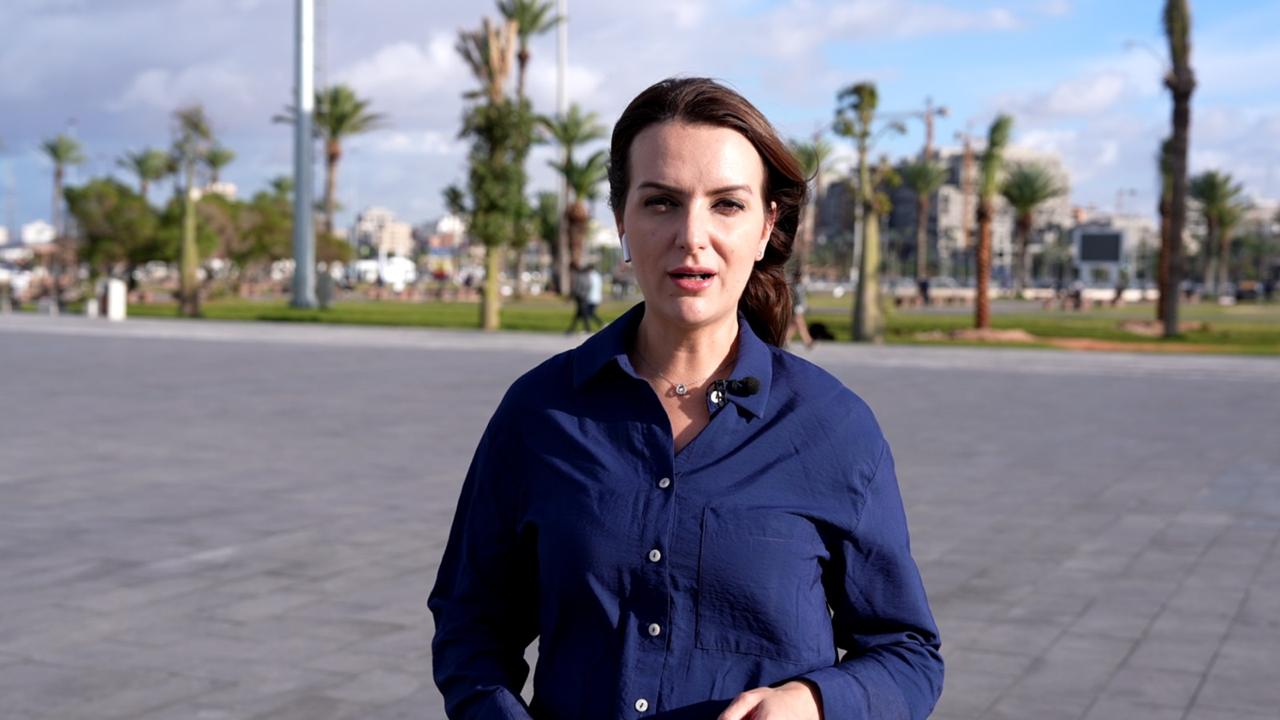
ISLAMABAD (Urdu Times) Azerbaijani Journalist Documents Libya’s Reality 15 Years After Gaddafi’s Fall
What happens to a country after the world stops paying attention?
For Azerbaijani journalist and lead documentary producer Anastasiya Lavrina, this question has increasingly defined her work. Over the past months, she has been developing a series of Frontline documentaries from conflict-affected regions, reporting directly from the ground and focusing on stories that rarely reach international audiences.
Before, Lavrina also worked in Pakistani-administered Kashmir, where her documentary explored security tensions, divided communities, and the daily realities of civilians living in one of the world’s most protracted geopolitical disputes. The film also addressed broader human rights concerns, including communication shutdowns, movement restrictions, and limitations on civil liberties reported in India-administered areas.
“That experience taught me that conflicts are never just about politics,” she says. “They affect ordinary people first. And those human stories are often the ones the world doesn’t see.”
Now, she brings that same immersive approach to her latest Frontline film for AnewZ TV — “Libya: 15 Years After Muammar Gaddafi’s Fall.”
Fifteen years after the 2011 uprising, Libya remains suspended between fragmentation and recovery. Rival authorities, armed formations, foreign influence, and competition over strategic energy assets continue to shape the country’s trajectory. Yet much of this reality has remained beyond the reach of international media.
For Lavrina, the objective was clear: go beyond the headlines.
After months of preparation and negotiations, the she secured rare access to restricted facilities, strategic infrastructure, and key decision-makers — places typically closed to foreign press. In several cases, filming took place under heightened security risks and without formal guarantees.
“Some of the most important stories are exactly the ones that are hardest to reach,” she explains. “Sometimes you have to work at your own risk, because that’s the only way to show what usually stays off-camera. That’s what documentary journalism means to me.”
Libya has become Lavrina’s fifth documentary filmed in conflict zones, reinforcing her commitment to field-based reporting rather than studio analysis.
Her goal, she adds, was to challenge simplified narratives about the country.
“Many still describe Libya as a failed state, but reality is far more complex. There are serious challenges, but there are also real efforts to rebuild institutions and restore stability. Libya holds Africa’s largest proven oil reserves, and its strategic importance is only growing. Most importantly, people still believe their country has a future.”
The documentary, now available across AnewZ platforms, continues the channel’s commitment to immersive, on-the-ground journalism from regions experiencing conflict, political transition, and geopolitical change.