
 E Paper
ISLAMABAD (Urdu Times) Sonam Wangchuk The New “Anti-National” Of Modi’s India

Share

Written by: Dr. Gohar Ali Iftikhar
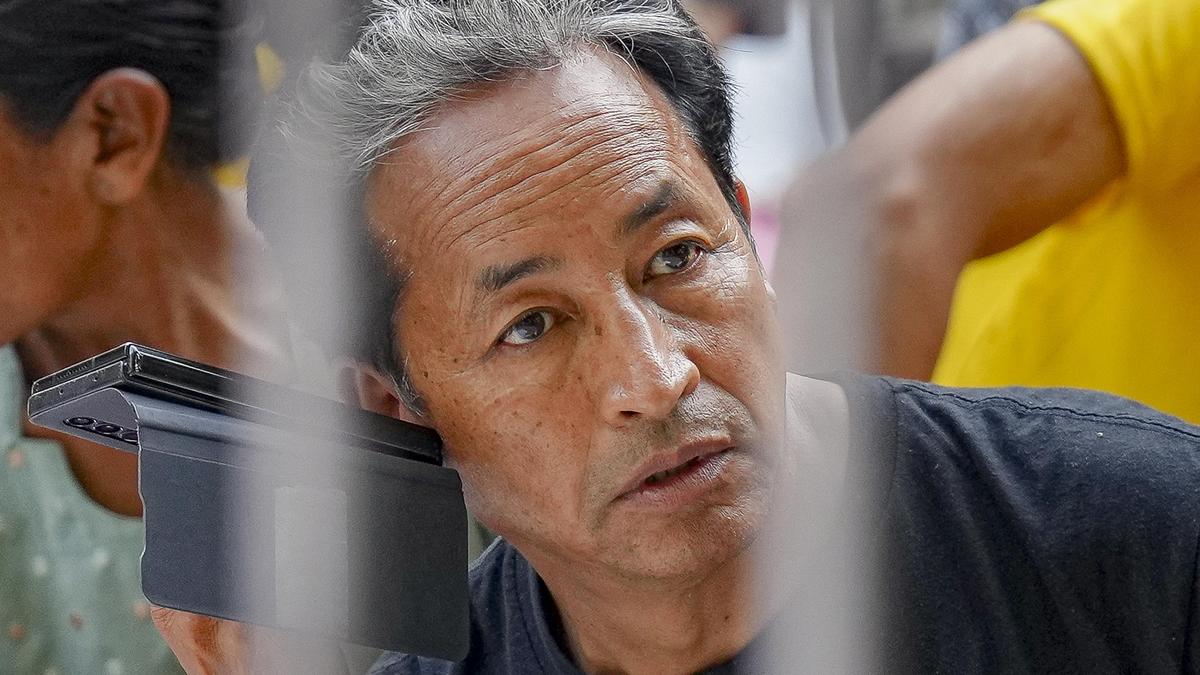
ISLAMABAD (Urdu Times) Starting with a huge round of applause for the jingoistic, tyrannical, and ultra-nationalist government of India for arresting the topmost “anti-national” from Jantar Mantar, Delhi—the heart of India. Let’s unfold what makes him so “anti-national”:
- He tried to end water scarcity in the cold desert.
- He was the pioneer of establishing a solar-powered school at a high altitude where it is nearly impossible.
- He put his efforts into increasing literacy in Ladakh.
- He attempted to provide employment opportunities to empower the people.
- He developed solar-heated tents for soldiers stationed in harsh terrains.
- He received the Ramon Magsaysay Award in 2018.
- He represented his homeland in global forums.
- His latest and most “dangerous” act was speaking out on the NEET exam leak issue.
NEET is basically the medical entrance exam in India, similar to the MDCAT in Pakistan. On May 3rd, 2026, more than 2 million medical aspirants appeared for the test. After the exam, allegations surfaced that the paper had been leaked. As a result, the government declared the results null and void. In the aftermath, twelve precious young lives were lost to suicide because their hopes and futures were snatched away. It was a massive setback for the students and their families.
Students led Cockroach Janta kept this issue alive. Sonam Wangchuk supported their cause, questioning the meritocracy of the education system. He dared to raise his voice regarding the paper leak, demanding the resignation of the Education Minister and tangible reforms in the testing system. But the government had no time to answer. Consequently, he opted for a peaceful form of protest: a hunger strike. It is important to mention that the tradition of the hunger strike is not new; history is marked by figures like Sardar Bhagat Singh and Jatindra Nath Das in 1929, Irom Chanu Sharmila in 2000, Anna Hazare in 2011, G.D. Agarwal in 2018, and now Sonam Wangchuk in 2026.
Critics often ask: what is going to change with one resignation? In the words of Wangchuk, this is just the beginning of accountability. Without this first step, the culture of nepotism and cronyism will further entrench itself in the system, eventually becoming incurable.
It was reported that on the 20th day of his hunger strike—around 0700 hours on Saturday, July 18th—Sonam Wangchuk was taken into custody by the Delhi Police and shifted to Safdarjung Hospital. It is widely expected that authorities will try to forcefully break his hunger strike against his will.
Globally, it is an established fact that quality education is a catalyst for transforming a country toward sustainability, development, prosperity, and peace. Professionals play a vital role in this transformation. To secure admission, candidates must pass various entrance tests depending on the degree. It is the primary responsibility of the government to develop a transparent and advanced testing system to identify the best available talent for these professions.
The protection of public interest and accountability is paramount in a functional democracy. However, in Sonam Wangchuk’s case, raising his voice and demanding accountability was interpreted as anti-nationalism. The true spirit of democratic culture and moral authority is not yet fully strengthened in post-colonial countries, primarily because the “colonial hangover” within the government apparatus has not yet over. Not all but many at the helm of affairs suffer from a syndrome where they consider themselves nothing less than colonial masters. They act like viceroys who evade accountability, viewing the public as too “uncivilized” to contest or question their actions.