 E Paper

ISLAMABAD (Urdu Times) Budget for the fiscal year 2026-27: Expectations, Hopes

Share
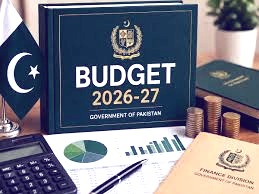
ISLAMABAD (Urdu Times) The federal budget for the fiscal year 2026-27 is of utmost importance for Pakistan’s economy, in which the government’s main challenge is to meet the targets of the International Monetary Fund (IMF)’s stringent program as well as provide relief to the public and the business community due to inflation.
Various stakeholders have attached the following major expectations and hopes to this budget, which will be presented in June 2026:
1. Expectations of the public and the salaried class;
Increase in tax exemption limit: In view of the current wave of inflation, the salaried class hopes that the annual tax exemption limit will be increased from the current Rs. 6 lakh to Rs. 8 to 12 lakh. Increase in salaries and pensions:
Government employees are expecting at least a 15 to 20 percent increase in salaries and pensions in proportion to the rising prices. Relief Network (BISP):
The budget of the Benazir Income Support Program is expected to increase so that the poorest families can be protected from rising inflation. 2. Expectations of the business class and industrialists;
Reduction in energy tariffs: The industry’s biggest hope is a reduction in electricity and gas prices or restoration of subsidies so that the cost of production is reduced and they can compete in the global market. Expansion of tax net: Chambers of Commerce demand that instead of putting more burden on already tax-paying industries, undocumented sectors, retailers and real estate be brought into the tax net.
Export incentives:
Textile and IT sectors hope that duty drawback and soft loan facilities on export products will be maintained.
3. Government’s major challenges and targets;
IMF conditions: The government is facing pressure to maintain or increase the petroleum levy and GST rates to reduce the deficit.
Increase in tax target:
An aggressive tax target is likely to be set for the Federal Board of Revenue (FBR) for which digitalization will be used.
Development Budget (PSDP):
Allocation of funds for infrastructure, especially the second phase of CPEC and Special Economic Zones (SEZs), will remain the government’s priority.
4. Investment and SIFC projects Special incentives: Special exemptions in customs and income tax are expected for agriculture, mining, IT and green energy projects under the Special Investment Facilitation Council (SIFC).
Pak-China Private Sector Agreements:
The budget is expected to provide legal and financial safeguards to implement the $7.54 billion private sector projects agreed upon at the Hangzhou Conference in May 2026.
The biggest challenge for the IT sector and freelancers in the federal budget for fiscal year 2026-27 is to maintain the current concessional tax structure (0.25% fixed rate) and implement a new tax slab on permanent remote workers.
The Pakistan Freelancers Association (PAFLA) and Pakistan Software Houses Association (P@SHA) have submitted their final recommendations and suggestions for the budget to the government, which are being considered by the Ministry of Finance and the FBR.
The details of the proposed taxes and incentives on the IT sector, freelancers and digital services are as follows:
1. Tax rate for IT sector and freelancers 0.25% Final Tax Regime (FTR): Under the current law, IT exporters and freelancers registered with the Pakistan Software Export Board (PSEB) pay only 0.25% tax on foreign income (remittances).
This concession is expiring in June 2026, however, associations have demanded its extension for the next 5 to 10 years.
Tax on unregistered individuals:
A proposal is under consideration in the budget to increase the tax rate on freelancers or YouTubers who are not registered with PSEB from the current 1% to 3.5%.
Income tax on local income: The tax rate for freelancers working within Pakistan is as per the general income tax slab, where there is 0% tax on annual income up to Rs. 6 lakh, while a progressive tax of 5% to 35% is applicable on income above this.
2. New tax crackdown on “remote workers” End tax arbitrage:
The budget proposes to clarify the legal distinction between “genuine freelancers” (who do various projects) and “overseas salaried remote workers” (who are permanent employees of outside companies).
Proposed income tax slab: According to the proposal, remote workers who receive a regular monthly salary from foreign companies should be removed from the 0.25% discount and be subject to regular income tax ranging from 5% to 20% to bring them on par with employees of local IT companies.
3. Proposed government incentives for freelancers Rs 5 billion fund: It is proposed to allocate a budget of Rs 5 billion for digital skills programs, artificial intelligence (AI), and advanced training in cloud computing.
Establishment of freelancing hubs: A study is being conducted to set up modern freelancing hubs equipped with free internet and electricity in several cities of the country and to provide subsidies on international certifications.
Banking facilities:
It is proposed to allow freelancers to keep more than 50% of their foreign earnings in their dollar accounts and to set up technology business branches.
4. Possible taxes on digital services and e-commerce The following stringent measures are expected from the FBR on the digital retail sector to increase revenue: Digital Presence Proceeds Tax: Proposal of 5% tax on the income of foreign e-commerce platforms operating in Pakistan. Social Media Advertising Tax: Consideration of imposing a 5% tax on running advertisements on Facebook, Google, or other international platforms.Sales Tax on Online Shopping: The proposal includes levying 18% General Sales Tax (GST) on items ordered through digital platforms and 2% withholding tax on online transactions.
The government is adopting a dual strategy for the real estate and property sector in the federal budget for the financial year 2026-27,
which includes proposals to provide relief to filers to break the market stagnation on the one hand and to prevent speculative trading on the other.
The Federal Board of Revenue (FBR) and various economic institutions have made the most important recommendations to document this sector.
The details of the proposed taxes and relief in the real estate sector for the budget 2026-27 are as follows:
1. Proposals for a major reduction in withholding tax (WHT) Significant reduction in tax rates for filers is being considered to bring buyers back to the property market:
On buying property (Buyers): It is proposed to reduce the withholding tax for filers from the current 1.5% to just 0.25%
On selling property (Sellers):
It is recommended to reduce the tax on the sale of property for filers from 4.5% to 1.5% Strictness on non-filers:
The tax rate for non-filers will be maintained at a very high level (from 10% to 15%) to discourage undocumented capital.
FBR Historic Relief in Property Valuations The government has taken a major administrative step ahead of the budget by reducing the official property prices: Reduction from 30% to 35%: FBR property valuation tables have been reduced by 30 to 35% in major cities like Islamabad, Rawalpindi and Lahore. Budget Impact: After this decision, which will be implemented from July 1, 2026, the total government fees and taxes at the time of property registration and transfer will automatically be reduced significantly. 3. New tax on speculation and vacant plots (Plot Flipping) To divert capital towards the construction industry instead of freezing it in plots alone, the Institute of Cost and Management Accountants (ICMAP) has proposed an important levy:
2% additional wealth tax: If a person owns a second or additional residential plot or property worth more than Rs 20 million (20 million), then it is proposed to impose an additional tax of 2% on its market value
First residence exemption: To protect ordinary citizens and genuine buyers, the first personal residence will be completely exempted from this tax
Restructuring of Section 7E (Tax on fictitious income)Negotiations ongoing: There is intense pressure on the Ministry of Finance from real estate stakeholders and overseas Pakistanis to completely abolish or relax Section 7E (under which 1% fictitious income tax is levied on vacant plots).Expected outcome: Overseas Pakistanis are expected to get a big exemption from this section in the budget It is hoped that the inflow of dollars (remittances) into the country will increase.
Green Construction and SIFC Projects Relief on Construction Materials: On the recommendation of the Special Investment Facilitation Council (SIFC), customs duty on import of eco-friendly construction materials and prefab machinery is likely to be reduced.
Holiday on Industrial Plots: The 10-year income tax exemption on allotment of industrial and commercial plots in CPEC Special Economic Zones (SEZs) and Gwadar Free Zone will continue.
The main objective of the virtual negotiations between the Ministry of Finance and the FBR with the International Monetary Fund (IMF) for the federal budget for the financial year 2026-27 is to reduce the tax burden on the salaried class and to change the threshold of the last slab. The Pakistan Business Council (PBC) and the Federation of Pakistan Chambers of Commerce and Industry have submitted final recommendations for a reduction in income tax rates by up to 5% to stop brain drain. The details of the possible tax slabs and salary-wise deductions under consideration for the June 2026 budget are as follows: 1. Proposed tax slabs and concessions (Budget 2026-27) According to official sources, tax rates are being directly reduced for the middle class earning Rs 1.2 million to Rs 2.2 million annually: Tax-free threshold: It is proposed to maintain 0% tax on income up to Rs 600,000 annually (Rs 50,000 per month). Demands by various alliances to increase it to Rs 80,000 per month are also under consideration. Low-income slab (up to Rs 1 lakh per month): It is proposed to reduce the current tax rate on those earning Rs 100,000 per month from 5% to 2.5%. Middle-income slab (Rs 1.8 lakh to 3.3 lakh per month): A gradual reduction in tax rates from 15% to 27.5% has been proposed for this bracket. High-income slab (more than Rs 3.3 lakh per month): Discussions are underway to reduce the rate of the top tax slab from 35% to 32.5%. 2. Surcharge on income above Rs 10 million to curb brain drain: The Pakistan Business Council (PBC) has recommended that the 9% additional surcharge imposed on top professionals earning more than Rs 10 million (10 million) annually be completely abolished. Due to this tax, the country’s top managers and engineers are increasingly moving abroad. 3. Chart of possible salary cuts (monthly estimates) The following estimated chart is under consideration for the final comparison of relief in the budget:Monthly Salary (PKR)Current Monthly Tax (Estimated)Potential Monthly Tax after Budget 2026-27Expected Monthly Relief/SavingsUp to Rs.50,000Rs.0Rs.0No Tax (Exemption)Rs.100,000Rs.2,500Rs.1,250Rs.1,250Rs.200,000Rs.15,000Rs.12,000Rs.3,000Rs.333,000Rs.52,000Rs.45,800Rs.6,200
Government’s Alternative Plan ;
The IMF’s condition is that the deficit of this relief given to the salaried class (which amounts to about Rs 50 billion) should be met from other sectors: Tax on traders: Implementation of a strict “fixed tax scheme” for retailers and shopkeepers. Sales tax on luxury goods: Increase in sales tax rate on hybrid and electric vehicles (EVs). Penalty on cash transactions: Proposals include a surcharge of Rs 3 per liter on purchasing petrol with cash and a new withholding tax on cash withdrawals exceeding Rs 50,000 per day.
The budget includes an ad hoc relief allowance of 10 to 15 percent in the salaries of government employees in proportion to inflation, while a final proposal for a 10 percent increase for pensioners has been prepared. According to sources in the Ministry of Finance, these proposals have been made keeping in mind the budget deficit limits in the recent virtual talks with the IMF.
The expected details of the budget 2026-27 for government employees and pensioners are as follows:
1. Expected increase in salaries (Grade 1 to 22) Ad hoc relief allowance: An increase of 15 percent is proposed for employees in Grades 1 to 16 and 10 percent for officers in Grades 17 to 22.
Applicability to basic pay: This increase will be applicable to the current running basic pay of employees. Medical and conveyance allowance: Due to the increase in the prices of petrol and medicines, a revision of up to 20 percent has also been recommended in medical allowance and conveyance allowance.
2. 10 percent increase in benefits for pensioners: An ad hoc increase of 10 percent is expected in the net pension of lakhs of retired federal employees across the country.
Pension Reforms Implementation: New pension amendments are being implemented from this budget, under which pension will be calculated on the average salary of the last three years for employees retiring in the future.
3. Estimated increase by grade (chart)Employee gradeAverage basic salary (PKR)Expected increase (percentage)Expected net increase in monthly salary;Grade 1 to Rs. 525,00015%Rs. 3,750Grade 11 to Rs. 1645,00015%Rs. 6,750Grade 17 to Rs. 1990,00010%Rs. 9,000Grade 20 to Rs. 22180,00010%Rs. 18,0004. Collaboration between the Federation and the ProvincesProvincial Budget: After the final approval by the Federation, the governments of Punjab, Sindh, Khyber Pakhtunkhwa and Balochistan will also announce salary increases in their budgets by the same proportion.
The federal budget is considering a strong proposal to increase the quarterly installment of eligible women under the Benazir Income Support Program from the current Rs. 14,500 to Rs. 20,000.
The International Monetary Fund has recommended the Government of Pakistan to significantly increase the budget and provide immediate economic relief to eligible families in view of rising inflation. The details of various BISP initiatives and expected increase in benefits in the budget are as follows:
1. Benazir Kafalat Program (Quarterly Installment) Proposed Installment: Eligible women are currently receiving Rs. 14,500 after the recent extension in Ramadan 2026. The new budget proposes to increase this amount to Rs. 20,000, which includes a lump sum increase of Rs. 5,500. Implementation of the increase: After the approval of the budget, this new and increased installment is expected to start from January 2027.
2. Benazir Educational Scholarships and Development Program; The scope of scholarships is also being expanded for school-going children and mothers:
Educational Scholarships: An additional Rs. 500 has been proposed in the monthly educational scholarship of registered boys and girls to reduce the dropout ratio.
Development Program: An additional relief of up to Rs. 500 in the nutritional support scholarship for pregnant women and newborn children is also recommended as part of the budget.
3. Expansion of the number of eligible families and enrollment of new families: According to the budget proposals, the scope of the existing 1 crore (10 million) eligible families will be expanded and more than 2 lakh poor families will be made part of this network by the end of the financial year 2026.
4. Budget Allocation (Total Funds)Increase in Total Funds: The Ministry of Finance has estimated that the total budget for the social security sector will be increased to Rs 592 billion to ensure transparent payment of all installments without any deductions.
According to the report, the International Monetary Fund (IMF) has given its approval to Pakistan’s budget for the next fiscal year during a week-long visit (May 13-20). The Fund has openly admitted in its press release that the focus of its mission was on recent changes, economic reforms and especially the fiscal strategy for fiscal year 2027.On the other hand, external shocks such as the Middle East crisis, which has led to shortages of oil, LNG, fertilizers, helium and other key minerals worldwide, have been surprisingly dismissed as insignificant and insignificant for Pakistan. Therefore, there will be few surprises in the budget to be presented on Friday for two reasons. (a) The documents for the third review of the Extended Fund Facility (EFF) and the second review of the Resilience and Sustainability Facility (RSF) were uploaded on the Fund’s website on May 15, two days after the arrival of the mission to review the budget. These documents detail the time-bound conditions and structural targets agreed with the authorities, which will remain in force until the next mandatory quarterly review on September 15. In the event of reaching a staff-level agreement, an tranche of SDR 760 million under the EFF and SDR 76.9 million under the RSF are expected to be disbursed. (b) Budget makers generally refuse to take responsibility for about 75 to 80 percent of the budget, saying that these decisions are made by the elite/influential classes and the IMF in case the country is in the fund program. The annual increase in total budget expenditure is entirely dependent on these dreams of gross domestic product (GDP) growth, which are based on overly optimistic assumptions. The fact is that after Covid-19, except for the financial year 2021-22, the country’s growth rate never came close to the government’s claims.
Since Pakistan has been in the grip of strict IMF conditions since 2019, all the anger to meet the deficit targets set by the fund is always directed at the Public Sector Development Program (PSDP) and it is brutally cut. Sadly, this has been the trend of almost all the seasons spent with the IMF, Pakistan is currently going through the rigors of its 24th program where the bleeding of the development budget has become a tradition. The result is right in front of us, the amount is allocated in the budget to the extent of papers but the release of actual development funds is constantly shrinking. The situation has become such that during July-April 2026, this rate has fallen to an alarmingly low level of just 51%. This blatant discrepancy between the “approval” of the Ministry of Planning for development funds and the “actual payment” by the Ministry of Finance reveals two things: first, the Ministry of Planning wants to shirk the responsibility of not getting the actual funds by making a paper budget despite the shrinking financial capacity (although it is its responsibility to make a realistic budget). Second, this could also be a ploy to put the Ministry of Finance in the dock, so that it can be shown that the treasury is withholding money for development issues and is focusing solely on daily current expenses. The entire focus of government policy has been to somehow or other meet the current expenses. The biggest part of this belly is the payment of interest (mark-up) on loans, which was budgeted at more than half (50 percent plus) of the total current expenditure in the year 2025-26, a compulsion that, if not paid, would bring the entire economy to a standstill. Interestingly, this rate is lower than the 54.5 percent achieved in the year 2024-25, although it was then budgeted at 56.8 percent of the total current expenditure, which revealed a huge manipulation or difference of Rs 813 billion in total. Keeping less money for interest (mark-up) this year does not mean that the government has reduced borrowing, but the trick is that now the cost of getting loans is cheaper. It so happened that past loans were rescheduled, which not only lengthened the repayment period but temporarily eased the burden of immediate interest. At the same time, dreams of a reduction in the policy rate were being dreamed of till December last year, but the Middle East crisis dashed these hopes and the interest rate had to be increased further, a fact that belies the claims that the impact of this global conflict was “limited” for Pakistan. It is also worth noting that the 1.25 trillion (two hundred and twenty billion) rupees borrowed from commercial banks to eliminate the circular debt were not put into the markup account with the blessing of the IMF, but were separated as a “one-off expense”. If we look at it, the budgeted markup for the year 2024-25 was Rs 829 billion higher than the actual expenditure at the end of the year, the credit for which goes to the temporary reduction in the interest rate and rescheduling. Now, the budget documents for the next financial year 2026-27 will reveal how much the actual expenditure on this issue exceeded the budget estimates. On the other hand, defense expenditure, which was 13.3 percent of total current expenditure in 2024-25, jumped to 15.62 percent in 2025-26. The reason for this huge increase is the recent wave of terrorism in the country and the resulting increase in operational expenses, however, it is also important to recall that according to the last year’s official documents, the total current expenditure was still shown to be short by Rs813 billion. Due to a large increase in salaries from taxpayers’ money, the cost of running the civilian government increased to 5.9 percent of total current expenditure in the current year’s budget compared to 5.4 percent in the last year’s revised estimates. The amount of pension has increased from Rs1.014 trillion in the last year’s revised estimates to Rs1.055 trillion this year. This amount is reserved for public sector pensioners and does not include 93 percent of those associated with the private sector.