 E Paper
Islamabad(Urdu Times) : Pakistan’s Diplomatic Moment: The Islamabad Peace Process and a Race to Prevent a Wider War

Share
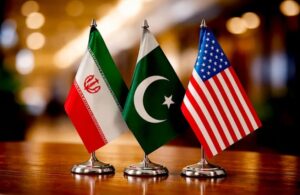
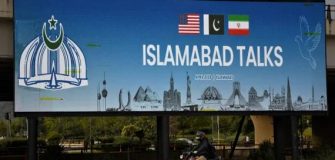
Iran and the United States of America have never had good relations but the recent conflict that intensified in late February 2026 was the result of rising tensions and the failed negotiations between both states. The situation worsened when U.S. and Israel launched coordinated airstrikes on Iranian military and government sites that caused the death of the Supreme Leader of Iran, Ayatollah Ali Khamenei. Israel and US killed both first and second tier leadership of Iran. These actions triggered a strong military response from Tehran. A dangerous cycle of escalation began that spread to whole Middle Eastern region. The war killed thousands of people across multiple countries, shut down the world’s most critical oil passage, the Strait of Hormuz, and sent energy prices soaring. As a result, the global economy suffered and most importantly, the world was at the brink of broader regional war and there were speculations about potential World War 3. Amid the fears of further escalations, international community struggled to find a credible partner that could stay neutral and had the trust of both Iran and America. At this critical moment, Pakistan stepped forward as a key diplomatic player that realized how deadly further escalations could be and how important it is to restore world peace. It was determined to prevent further damage. The efforts of Pakistan resulted in 2 weeks ceasefire between Iran and America and the Islamabad Peace Process began. It is a series of intense diplomatic efforts centered around the Islamabad Talks, hosted by Pakistan in its capital, Islamabad, on April 11–12, 2026. These talks became one of the most significant peace initiatives of the modern era.
The Islamabad Talks hosted by Pakistan carry great significance because, since the Islamic Revolution in Iran in 1979, the leadership of Iran and the United States had never engaged in face-to-face discussions. No country had been able to bring them together under one roof and at the same table but Pakistan achieved what no one else could. Pakistan has always supported world peace, security, and order. Even in these critical times, Pakistan under the leadership of Honorable Prime Minister Shehbaz Sharif and Field Marshal Gen.
Muhammad Asim Munir, worked tirelessly behind the scenes, it burned midnight oil, engaged in backchannel diplomacy and took all the stakeholders in confidence. As a result of these efforts, whole world witnessed Iranian and the American delegations arriving Pakistan and engaging in peace talks with each other. It was a sight that surprised people across the globe and all the nations around the world praised Pakistan for its remarkable diplomacy. Pakistan occupies a unique geopolitical position. It shares a 909 km long border with Iran and Iran was the first Muslim country to recognize Pakistan at the time of independence. Both are brothers and very good neighbors also. In Muslim world also, Pakistan carries great significance as it is only Muslim nuclear power on Earth. Similarly, Pakistan enjoys a very good chemistry with America, particularly with Trump administration. Pakistan is a non-NATO ally of America. Field Marshal Asim Munir and Prime Minister Shehbaz Sharif have taken Pakistan-U.S. relations to the new heights. Even last year, in 2025, President Trump could be seen appreciating Pakistan at all forums. In addition, Pakistan maintains very friendly relations with all Gulf countries and with China also. Against this backdrop, Pakistan was the only country that was in position to mediate between Iran and U.S. Both the warring parties trust Pakistan since Pakistan does not belong to any single camp. It is a nation that’s foreign policy and foreign relations are very strong. Moreover, when Pakistan started working to reduce tensions, both America and Iran showed full confidence in Pakistan. For them, Pakistan was a trusted and credible partner. This balance in relations and the trust on Pakistan enabled Islamabad to communicate with all sides at a time when direct contact was extremely limited. It is worth pointing out that Pakistan did not become a mediator overnight. It has a record as a mediator. In 1979, when diplomatic ties were established between Beijing and Washington, it was with the help of Pakistan’s then-President Gen. Yahya Khan’s back-channel diplomacy. Similarly, Pakistan played a critical role in 1988 Geneva Accords and withdrawal of Soviet forces from Afghanistan. In contemporary times, Pakistan facilitated contacts between the Afghan Taliban and Washington. Pakistan’s efforts led to Doha talks that culminated in a 2020 agreement and made the withdrawal of U.S.-led NATO troops possible. So, it is clear that whenever region’s peace or security is at stake or even world peace is endangered, Pakistan always steps forward and plays an active role. It never stays behind as a passive observer.
Pakistan lived up to the expectations of its partners, did not take sides, condemned the violence and the war, and adopted a strategy of active neutrality combined with proactive diplomacy. The leadership of Pakistan including Honorable Prime Minister, Field Marshal and the Foreign Minister Ishaq Dar, launched intense diplomatic campaign and took Washington, Tehran, Beijing, and all regional capitals in confidence. These efforts resulted in a temporary 2 weeks ceasefire Whole world celebrated this extraordinary achievement of Pakistan as it created a window of opportunity for peace.
1 phase of peace talks in Islamabad was the next major diplomatic success of Pakistan. In these 21 hours long and intense negotiations, Pakistan acted as the central mediator ,facilitating communication between two deeply mistrustful rivals.
The agenda included:
Ending the ongoing war
Addressing Iran’s nuclear program
Lifting sanctions
Securing global energy routes
Preventing future military escalation
Although, talks in Islamabad concluded without any agreement as both parties had their reservations, still Pakistan’s role in bringing Iran and U.S. officials together for negotiations during these uncertain circumstances show how determined Pakistan is to restore world peace. It is not a failure of Pakistan but a major diplomatic breakthrough that deserves immense appreciation.
Islamabad Peace Process doesn’t end here. Even after disagreements between Iranian and American officials, Pakistan is not disappointed. The leadership of Pakistan is trying its best to bridge the gaps between U.S. and Iran and making this temporary ceasefire into a permanent one. To make Islamabad Peace Process a true success, the leadership of Pakistan is working actively. The Prime Minister of Pakistan, Mian M. Shehbaz Sharif, began a four-day regional trip on Wednesday, 15 April, 2026. His first stop was Jeddah, Saudi Arabia, where he met Saudi Crown Prince Mohammed bin Salman. The Crown Prince praising Pakistani leadership for its constructive role in restoring world peace shows the growing international recognition of Pakistan’s diplomatic efforts and its commitment to global stability. On Thursday, 16 April, 2026, Honorable Prime Minister reached Doha and met Qatar’s Emir Sheikh Tamim bin Hamad Al Thani. Both leaders discussed the importance of de-escalation and dialogue to help reduce the tensions in the region. This meeting also portrays Pakistan as a responsible and peace-oriented nation. It shows that the Gulf allies have a strong faith in Pakistan’s role as a mediator. Antalya, Türkiye, is the next stop of PM Shehbaz Sharif. At the same time, when the prime minister of Pakistan is on regional tour, the Pakistan’s Chief of Defence Forces, Gen. Asim Munir, is in Tehran where he was warmly welcomed by Iranian Foreign Minister Abbas Araghchi. This is a dual-tracked strategy. On one side, Prime Minister is engaged in active regional diplomacy. He is not waiting for further events to unfold, instead he is trying to garner support from Gulf allies to shape outcomes. While on the other, Field Marshal of Pakistan is engaged in hard negotiations between the two sides to narrow gaps between Iran and the U.S. This approach deserves immense appreciation. It is not just a symbolic diplomacy, all eyes are actually on Pakistan, which shows that for now, world peace really depends on Pakistan’s role as a mediator and peacemaker.
The Islamabad Peace Process is more than diplomacy or peace talks. It has presented Pakistan as a responsible player committed to world peace and security. It has shaped the international image of Pakistan. When military options were dominating headlines, Pakistan offered a diplomatic alternative. Its efforts helped slow down escalation and kept the door open for peace. Pakistan’s role in bringing together two countries with decades of hostility and no formal diplomatic relations is a major achievement. Pakistan’s role has been widely acknowledged internationally, with many viewing it as an emerging peace broker in global conflicts. At the same time, by engaging multiple stakeholders like China and Middle Eastern countries, Pakistan is making sure that it has broader regional support that will increase its chances of success.
It should be kept in mind that diplomacy is not about instant results. The talks may have not ended the war immediately, but it cannot overshadow Pakistan’s achievements in the whole peace
process. It was Pakistan who stopped the situation from getting more complicated. It has provided a platform to warring parties for negotiations and dialogue. It has reduced the risk of potential global conflict. No other nation could do it but Pakistan made it all happen.
Hence, the Islamabad Peace Process is a defining moment in Pakistan’s diplomatic history. Pakistan emerged as a ray of light when all world could see was the darkness of despair. The world was divided; war seemed very close, but Pakistan chose dialogue over confrontation. Pakistan brought Iran and U.S. to table talks, brokered a ceasefire, and engaged in continued diplomacy even after setbacks. It showed the world that middle powers can actually play decisive role in global peace. We are hopeful that the coming week i.e. from 20 April, 2026 to 26 April, 2026 will bring some good news for the world and it will go down in history since both Iran and U.S.have shown interests in the 2nd phase of talks. Nobody knows what the final outcome of this whole Islamabad Peace Process will be but one fact is loud and clear: when the world stood on the edge of a dangerous war, Pakistan stepped forward and made peace possible.

Written by By Mr. Khalid Taimur Akram, Executive Director, Pakistan
Research Center for a Community with Shared Future (PRCCSF), Islamabad