
 E Paper
ISLAMABAD (Urdu Times) Iranian Revolution Anniversary and Pakistan’s Participation in US-Iran Talks Amidst War Threats

Share
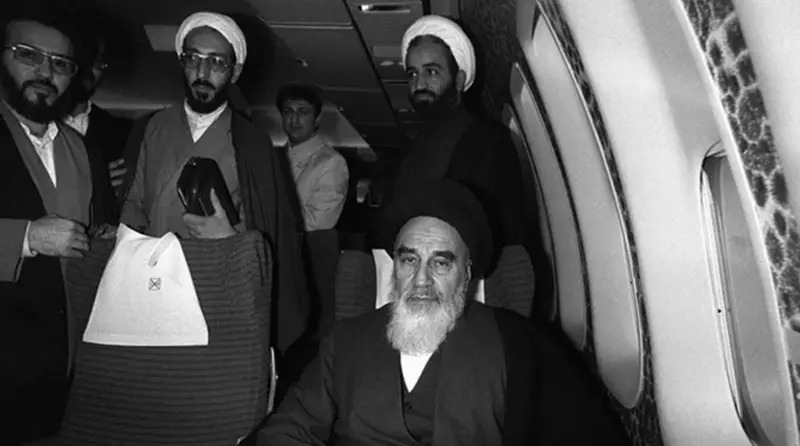
ISLAMABAD (Urdu Times) Iran’s 47th anniversary of the Islamic Revolution in 1979 is being celebrated amid heightened threats of war. The anniversary of the Iranian Revolution on February 11, 1979, is significant amid regional tensions and threats of war. Pakistan was the first to recognize the new Iranian government after the Iranian Revolution. Despite the complex relationship, the two countries have been increasing cooperation through talks on borders, trade, and security in an attempt to maintain balance. In the current war threats and regional situation, the two countries have been continuously negotiating and cooperating on issues such as security in Balochistan, border affairs, and drug control. According to senior Pakistani diplomatic analyst Asghar Ali Mubarak, Pakistan is the only country in the region that is not part of the Middle East but has become a part of the negotiations, and this is proof that Pakistan is interested in the developments in the region. Inviting Pakistan to join the Iran-US talks also proves that the US is changing its regional policy. Inviting Pakistan to join these talks is part of the new US policy, under which it wants to share its regional burden with other countries. Iran was the first country in the world to recognize Pakistan after India’s partition, while Pakistan was the first country to recognize the Iranian government after the 1979 Iranian Revolution. Exactly 47 years ago today, on January 16, 1979, the Shah of Iran, Mohammad Reza Pahlavi, fled Iran after months of violent protests against his rule. The Shah of Iran and his wife, Queen Farah, left Tehran for the Egyptian city of Aswan. The royal couple had evacuated their three young children to the United States the day before, on January 15. Before the Shah of Iran’s departure, official statements claimed that Mohammad Reza Pahlavi had left the country for ‘vacation’ and medical treatment, but it later emerged that he had been told to leave Iran by the Prime Minister he had appointed in early January 1979. By mid-January 1979, opposition to the Shah of Iran had taken the form of a united movement led by Iran’s greatest religious leader, Ayatollah Ruhollah Khomeini. Against this backdrop, the last two weeks of January 1979 were extremely dramatic, with the situation changing rapidly with every passing moment. On January 27, 1979, Ayatollah Ruhollah Khomeini, the spirit of the revolution in Iran, had declared the United States the ‘Great Satan’.
This was the period when Khomeini was living in exile in the suburbs of Paris.

At that time, the Iranian landscape was in deep chaos. Clashes between protesters and the army continued, shops and markets were closed indefinitely, and public services were suspended. Iran’s dictator, or Shah of Iran, Mohammad Reza Shah Pahlavi, eventually left the country under the pretext of a ‘vacation’. He left behind an unpopular prime minister and a disorganized army. By January 1979, Ayatollah Khomeini had brought his popular movement to its peak. The situation in Iran became extremely tense when Shapour Bakhtiar, the prime minister appointed by the Shah of Iran a few days earlier, deployed troops and tanks in and around the airport, and suspended all flight operations at the airport, in an attempt to prevent Ayatollah Khomeini’s expected return to Iran at the end of January. Iran was on the brink of civil war: the special forces of the royal army were ready to die for their king, while the ardent followers of Imam Khomeini were ready for armed struggle and “martyrdom.” On the morning of February 1, Ayatollah Khomeini arrived at Tehran airport, where he was enthusiastically welcomed by thousands of supporters. Within days of his arrival in Iran, he had appointed a parallel prime minister. Pakistan is pursuing a strategy of maintaining friendly relations with Iran and a balance with the US/Arab countries. Pakistan’s involvement represents an unprecedented elevation of Pakistan’s role from a silent back-channel facilitator to a direct participant. The talks are part of a push to manage tensions and potentially resolve nuclear issues. Pakistan has consistently encouraged talks to promote peace as a regional diplomacy. The Iranian Revolution took place in February 1979, ending a 2,500-year monarchy and establishing a theocracy. Pakistan was invited to attend the Iran-US de-escalation talks in early 2026, on the anniversary of the Islamic Revolution. The talks aim to reduce tensions and address nuclear concerns, with Pakistan acting as a key facilitator. This is a major boost to Pakistan’s diplomatic stature. The Pakistani Foreign Office confirmed in early February 2026 that Islamabad has been invited to attend the upcoming talks between Iran and the US aimed at reducing regional tensions.
 47th Anniversary Celebrations in 2026 With High Risks of Regional War Supreme Leader Ayatollah Ali Khamenei Warns Against US Attacks Despite the celebratory nature of the anniversary, current events are overshadowed by possible US military action and calls for talks. In previous years, Pakistan has celebrated the anniversary to strengthen bilateral ties despite disputes, but relations have fluctuated since the revolution.
Pakistan and Iran signed a ‘Friendship Treaty’ in 1950, and Pakistan’s first Prime Minister, Liaquat Ali Khan, visited Tehran in 1949, while the Shah of Iran paid his first official visit to Pakistan after the formation of Pakistan in 1950. Pakistan and Iran had previously had very friendly relations before the 1979 ‘revolution’ in Iran. The reason for this was that Iran was an ally of the United States at that time. Being an ally of the United States, relations between Pakistan and Iran were so good that Iran supported Pakistan in its war with India. According to an article written by Fatima Reza at the Institute of Strategic Studies in Islamabad, after the separation of East Pakistan in 1971, it was written, citing a statement by the Shah of Iran at that time, that ‘Iran did not want to see Pakistan further divided and India was told that if the tension between India and Pakistan increased further, they would come to Pakistan’s aid.’ However, these relations deteriorated after the Islamic Revolution in 1979 when Ayatollah Khamenei announced an ‘Islamic revolution’ in Iran. According to the article, during this time, the then-military dictator General Zia-ul-Haq started efforts to bring ‘Sunni Islam’ in Pakistan, as a result of which Shia-Sunni riots broke out in Pakistan in the 90s, and relations between Pakistan and Iran became extremely tense. In Afghanistan, when the Afghan Taliban took power in the 90s Even after the establishment of the Afghan Jihad, Pakistan and Iran took two paths. According to an article in the Journal of Asian Studies, both Iran and Pakistan opposed the Soviet Union in the ‘Afghan Jihad’ against the Soviet Union, but Iran supported the ‘Northern Alliance’ (which is mostly the Shia Hazara population) while Pakistan supported the ‘Mujahideen’. According to an article in the Institute of Strategic Studies, Pakistan was the first country to recognize the Afghan Taliban government, while Iran announced its support for the Northern Alliance in Afghanistan. Later, in 1998, Iranian diplomats were killed in the Afghan province of Mazar-e-Sharif, when the Afghan Taliban captured Mazar-e-Sharif after Kabul. Despite all this, relations between Pakistan and Iran did not come to the point of severing diplomatic relations. According to an article in the Institute of Strategic Studies, this was largely due to the efforts of the Foreign Ministries of both countries to improve relations. After 9/11, Pakistan openly sided with the US, and according to the same article, this was an opportunity for Iran to side with the US against the Afghan Taliban, but the then-US President George W. Bush had called Iran, Iraq, and North Korea the ‘roots of evil’ in a statement. And so Iran and Pakistan were still not on the same page, while on the other hand, Iran had announced its support for the Northern Alliance in Afghanistan, while Pakistan and the US were on the same page against the Afghan Taliban. During this time, Iran developed better relations with India, but even then, the tension did not increase that much. According to the article, at that time, Iran believed that the relationship between Iran and India was like that between Pakistan and Saudi Arabia.

Pakistan and Iran share a long border of 909 km with the Pakistani province of Balochistan and the Iranian province of Sistan-Baluchistan. Various incidents have occurred on this border in the past. Pakistan has accused Iran of cross-border infiltration in the past, while Iran has accused Pakistan of the presence of a militant organization called Jaish al-Adl in Pakistan. On the Iranian side of the border, there is a Baloch Sunni minority, who are angry with the central government of Iran and accuse it of discriminating against them on the basis of religion. According to the US Counter-Terrorism Service, an organization called Jaish al-Adl speaks about the rights of these Baloch. According to the article, this organization kidnapped 12 Iranian border guard personnel in 2018, and their recovery was made possible with the help of Pakistani security forces. Similarly, Pakistani security forces have also been targeted on this border in the past. In the past, relations became more tense when Indian spy Kulbhushan Jadhav entered Pakistan’s Balochistan province through the border from Iran and was arrested there. In the past, Pakistan has also helped Iran in counter-terrorism matters. According to the Journal of South Asian Studies, in 2007, Pakistan rescued 21 truck drivers from an organization called Jundalullah in a mountainous area of Balochistan. According to the same article, Abdul Malik Rigi, the central leader of Jundalullah, was arrested in 2010 while traveling on a plane from Dubai to Kyrgyzstan and was later killed. Regarding this, the then-Pakistani ambassador to Iran said that this arrest would not have been possible without Pakistan’s help. According to the article, Abdul Hamid Rigi, the brother of the Jundullah leader at that time, was also arrested by Pakistan and handed over to Iran. It should be noted that diplomatic relations between Islamabad and Tehran have been tense since Pakistan launched a counterattack on Iranian territory on January 18, 2024, in response to Iran’s attack on Panjgur in Balochistan on January 16, 2024. Iran’s attack on the outlawed Jaish-e-Adl base resulted in two deaths, and three girls were injured, while Pakistan’s attacks targeted the outlawed Baloch Liberation Army (BLA) and Baloch Liberation Front (BLF) bases. The Pakistani Foreign Ministry had called the Iranian attacks a “serious violation of its airspace” and said, “This is completely unacceptable and could have serious consequences.”

In response to the attack, Pakistan recalled its ambassador from Iran, and the Iranian ambassador to Pakistan, who was in Tehran at the time, was prevented from visiting Pakistan. Apart from Pakistan, several countries, including Saudi Arabia, Qatar, Egypt, Oman, and the United Arab Emirates, were invited to participate in the Iran-US talks, but only Pakistan has officially confirmed that it has received the invitation. Pakistan’s being invited to these talks is an encouraging development, whether it is being given the role of a mediator or an observer. Pakistan’s Foreign Ministry said that it was invited to participate in the nuclear talks between Iran and the US, which it accepted. Iranian Foreign Ministry spokesman Esmail Baghai said that Oman, Turkey, and other countries showed interest in hosting the talks between Tehran and Washington. The Trump administration had accepted the Iranian request to hold the talks in Oman instead of Turkey. Tensions between the US and Iran have been going on for the past several years, and last year the US also attacked Iran’s nuclear facilities, after which Iran launched missile attacks on the Al-Udeid Air Base in Qatar. US President Trump has once again been seen threatening to attack Iran several times and also said that the US aircraft carrier USS Abraham Lincoln is moving towards Iran, and he has also repeatedly hinted at talks with Iran. Pakistan’s Foreign Ministry said that the aim of these talks is to reduce tensions between the two countries. However, in the past, negotiations between Iran and the United States have revolved around reaching a nuclear agreement. The US position has been clear that it wants to completely dismantle Iran’s nuclear program and would hope for an agreement that includes a complete cessation of uranium enrichment. On the other hand, Iranian officials and President Masoud Peshmerga himself have repeatedly claimed that their country has never sought to acquire nuclear weapons and will never do so. According to the Iranian president, the country’s nuclear program is peaceful. Analysts believe that in this environment, some kind of agreement between the two countries is necessary because a US attack on Iran could be dangerous for the entire region. It is hoped that Iran and the US will reach some kind of agreement that will stop possible attacks on Iran. It is also important that the US knows that Iran is not Afghanistan, neither in terms of land, population, nor resources. Iran is not Iraq either. Iran has realized that it is necessary to reach an agreement with the US to save the government in the country. Keep in mind that in recent days, violent demonstrations have been taking place in Iran for about two weeks due to the poor economic situation. Through backdoor channels and intermediaries, Iran is also saying that we will not compromise on our missile program, we will not compromise on our relations with our proxies, but we can make some compromises on the US nuclear demands or come close to such a compromise. The Pakistani leadership believes that a diplomatic solution can be found to this issue, and it has also given the same message to Iran that it will not be right to harm American interests in the Middle East, and the remaining issues can be resolved diplomatically. Pakistani officials say that Pakistan is quietly facilitating talks between Iran and the US. Pakistan’s participation in the talks is an important development. Pakistan will continue to work for an agreement that averts the risk of military action. And for this, it will benefit from its strong relations with Tehran and Washington as well as from its relations with other regional partners. Pakistan and Iran share borders, and in such a situation, the growing tension between the US and Iran could also affect Pakistan. The Trump administration is taking Pakistan’s concerns about Iran seriously. In 2024, Iran and Pakistan also carried out attacks in each other’s border areas, but relations between the two countries have improved since then. Pakistan and Iran want to strengthen relations with each other, and Pakistan’s invitation to these talks indicates Pakistan’s importance.