 E Paper
ISLAMABAD (Urdu Times) BUILT HERITAGE TOURISM AND EMPLOYMENT GENERATION IN PAKISTAN

Share
ISLAMABAD (Urdu Times) Pakistan’s tourism sector already supports 4.73 million jobs and contributed $19.8 billion, or 5.8 percent of GDP, in 2023, according to the World Travel and Tourism Council (WTTC). Yet the country attracted only around 97,500 foreign tourists that year, its best showing in seven years. Turkey, by contrast, pulled in more than 56 million international visitors in 2024 alone and turned that into $61 billion in tourism revenue. The gap is not about which country has more to see. It is about what each country has done with what it already has.
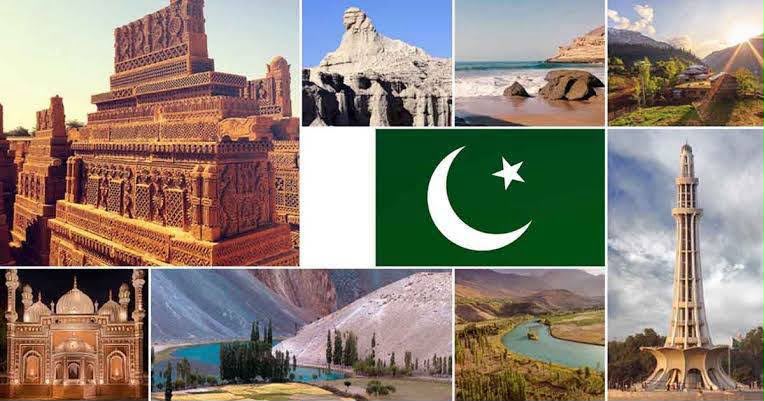
Pakistan has five of the world’s fourteen peaks above 8,000 metres, a full coastline, deserts, river valleys, and a history running from the Indus Valley civilisation through Mughal, Sikh and colonial rule. Almost none of that shows up in how few foreign visitors actually come, or in how little of the country’s own heritage infrastructure has been maintained. Gilgit-Baltistan is where the pattern is clearest. Tourist Police data for the region show Baltistan alone received 21,862 international tourists in 2024, up 121 percent from the year before, alongside 486,571 domestic visitors, a 117 percent jump. Much of that growth followed the upgrade of Skardu Airport, which made the region easier to reach by air. Shigar district, home to K2, Broad Peak and the Baltoro Glacier, drew over 15,600 foreign tourists on its own in 2024.
The numbers above are about landscape. Fewer of those visitors ever reach the forts that sit alongside it. Baltit Fort and Altit Fort in Hunza have been restored, are in good condition, and are easy to reach, and both draw steady visitor traffic. Kharpocho Fort in Skardu has not had the same treatment. It overlooks the Indus from a striking vantage point, but the climb up is rough, signage is minimal and it has never had a comparable restoration push. Tourists still come for the mountains around it. The fort itself is treated as optional. The same pattern shows up outside Gilgit-Baltistan. Lahore Fort has received sustained provincial investment, but Wazir Khan Mosque and the Shahi Hammam, a few hundred metres away in the same walled city, have not received comparable funding or footfall, despite sitting inside what could be one of South Asia’s richest heritage tourism circuits if the old city were promoted as one connected destination rather than a handful of separate sites.
This is where the case stops being about culture and starts being about employment. Pakistan’s youth unemployment rate stood at roughly 9.6 percent in 2025, according to World Bank estimates and youth make up the majority of the country’s population. Tourism is one of the few sectors where restoration spending converts directly into local jobs: masons and conservators to do the physical restoration, guides and interpreters once a site reopens, and hoteliers, transport operators, and food vendors around it.
The scale is already visible in the WTTC numbers. Pakistan’s tourism sector supports nearly as many jobs, 4.73 million, as Turkey’s entire tourism industry, which stood at 3.2 million in 2023 and is projected to reach 3.3 million in 2025. Turkey gets there with a tourism industry built around organised, marketed heritage sites and infrastructure. Pakistan gets there almost by accident, largely on the back of domestic travel, with a fraction of the foreign visitor base and a tourism sector that grew jobs by 6.7 percent in a single year without any comparable national restoration push. That is the opportunity being left on the table: a sector already generating jobs at scale despite the state’s neglect of its own heritage sites, not because of any investment in them.
Turkey was drawing under eight million foreign visitors a year in the mid-1990s, close to the 7.7 million recorded in 1995. By 2024, it was the world’s fourth most visited country, with international arrivals near 60 million and tourism revenue of $61 billion. The government’s 2025 target is 65 million visitors and $64 billion in revenue, and first-quarter 2025 tourism income was already up 5.6 percent year-on-year. That growth was not incidental. Turkey systematically restored and marketed its historical sites, from Ottoman-era tombs in Bursa and Bilecik to its forts, mosques, and old city quarters, and built the roads, hotels, signage, and guiding infrastructure needed to support the visitors those sites could attract. Heritage tourism became a planned economic sector, not an afterthought. Following measures need to be taken:-
- Fix physical access and safety at sites like Kharpocho Fort, where the climb, not the monument, is what keeps visitors away.
- Extend the Lahore Fort restoration model to Wazir Khan Mosque, the Shahi Hammam, Jehangir’s Tomb, Rohtas Fort etc. and comparable sites in other provinces, promoted as connected circuits rather than isolated stops.
- Invest in basic infrastructure in Gilgit-Baltistan: roads, signage, waste management, and trained local guides, alongside the restoration work itself.
- Build direct employment pipelines tied to heritage sites, training local youth as guides, conservators, and hospitality staff instead of leaving the work to the informal sector.
- Stop restructuring and renaming tourism bodies like PTDC every few years, and instead fund them consistently to train guides, run public awareness campaigns, and build a skilled tourism workforce.
Pakistan’s mountains and monuments are not disappearing overnight, but neglect compounds. Every year a fort goes unrepaired is a year of guide, conservation, and hospitality jobs that never materialise, while destinations elsewhere in the region invest in exactly the kind of heritage tourism Pakistan is leaving idle. The raw material is already there. What is missing is a state willing to treat it as an economic asset instead of a backdrop.