
 E Paper

ISLAMABAD (Urdu Times) A Medal for Merit: The Enduring Legacy of Muhammad Kamran Khan

Share
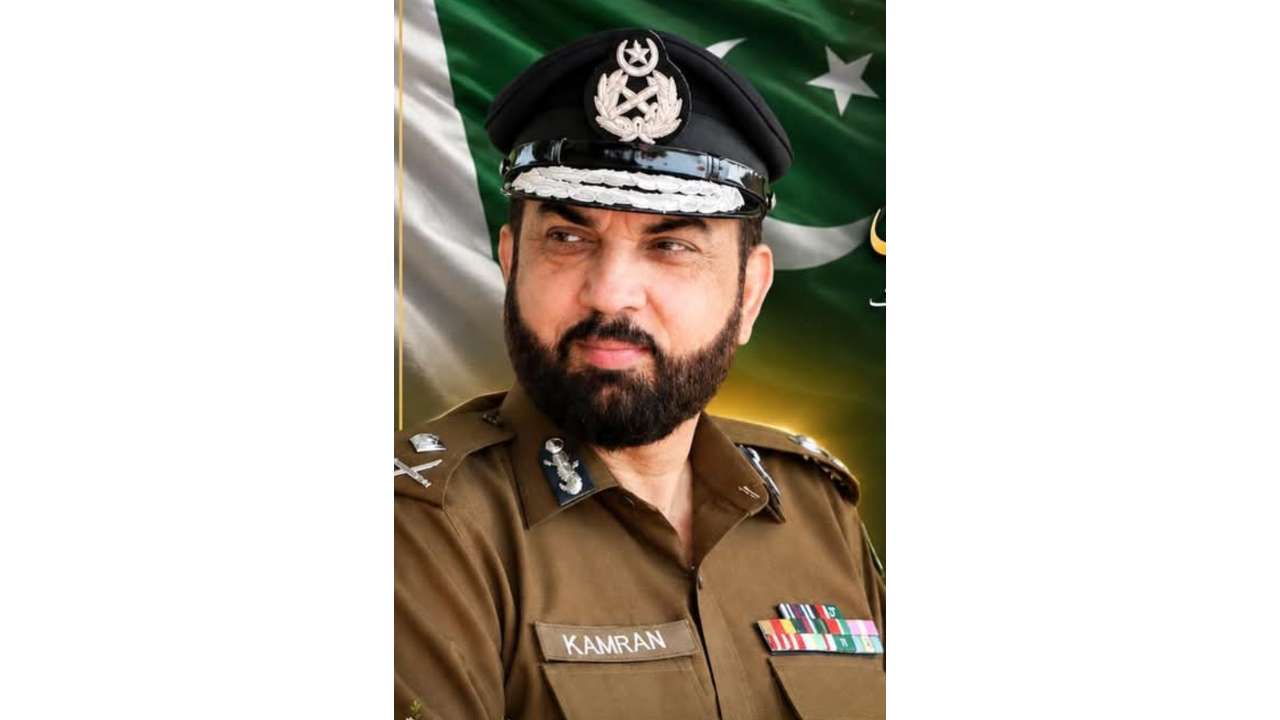
ISLAMABAD (Urdu Times) There are public officials whose careers are measured by the offices they occupy, and there are others whose legacy is measured by the institutions they leave stronger than they found them. The distinction is profound. Positions are temporary; institutions endure. In an age increasingly dominated by visibility, self-promotion, and the relentless pursuit of public attention, genuine public service often unfolds quietly, away from cameras and headlines. It is in that quieter realm—where performance matters more than publicity and duty outweighs personal ambition—that the career of Muhammad Kamran Khan must be understood.
The Government of Pakistan’s decision to confer upon him the Tamgha-e-Imtiaz is not merely the recognition of an individual. It is, more importantly, an acknowledgment of a professional philosophy—one rooted in discipline, integrity, competence, and an unwavering commitment to public service.
Having spent more than two decades reporting from Islamabad, observing governments rise and fall, bureaucracies evolve, and institutions struggle with the demands of modern governance, I have encountered countless public officials. Some possessed influence without vision. Others enjoyed prominence without substance. A few mastered the art of publicity more effectively than the responsibilities of leadership. Yet on rare occasions, one encounters a public servant whose reputation rests neither on connections nor on public relations, but on a consistent record of performance. Muhammad Kamran Khan belongs to that increasingly rare category.
I first met him in 2008 when he was serving as District Police Officer of Khanewal. It was not a lengthy meeting, nor did it involve any extraordinary circumstance. Yet first impressions often reveal what years of observation later confirm. What stood out was not authority, but composure; not ambition, but confidence; not rhetoric, but clarity of purpose. In the years that followed, although our professional paths crossed only occasionally, that impression remained remarkably consistent.
The story of Muhammad Kamran Khan’s career is, in many ways, the story of a public servant who allowed his work to define him.
In contemporary governance, there is an increasing tendency to confuse activity with achievement. Press conferences are mistaken for policy, announcements for implementation, and visibility for effectiveness. The true test of leadership, however, lies elsewhere. It lies in whether institutions function better, whether citizens feel safer, and whether public trust is strengthened.
Measured against those standards, Muhammad Kamran Khan’s career deserves careful attention.
His professional journey took him through some of Pakistan’s most challenging administrative and security environments. Few assignments test leadership more rigorously than service in Balochistan. The province’s vast geography, intricate tribal structures, security complexities, and developmental challenges create conditions in which even routine administrative decisions can carry strategic consequences.
For years, he served in districts where governance required not only administrative skill but also resilience, judgment, and patience. Balochistan has long challenged policymakers and administrators alike. Success there cannot be achieved through symbolism. It requires a deep understanding of local realities, the ability to build trust under difficult circumstances, and the courage to make decisions where the margin for error is extraordinarily small.
Those years helped shape a leadership style that would later define his work at the national level.
What distinguishes accomplished administrators from exceptional ones is their ability to evolve with changing circumstances. Muhammad Kamran Khan demonstrated that ability most visibly during his tenure at the Punjab Safe Cities Authority. At a time when policing around the world was undergoing a technological transformation, Pakistan faced a critical question: could its law-enforcement institutions adapt to the demands of the digital age?
The answer required more than procurement contracts and infrastructure projects. It required a fundamental rethinking of how public safety should be delivered in the twenty-first century.
Under his stewardship, the Safe Cities initiative matured into one of Pakistan’s most significant experiments in technology-driven governance. Surveillance systems, integrated command-and-control centers, emergency response mechanisms, and data-based policing became components of a broader effort to modernize law enforcement.
Yet the true significance of that transformation extended beyond technology itself.
Technology is merely a tool. Its value depends upon the quality of leadership guiding its application. Throughout modern history, governments have invested heavily in sophisticated systems that ultimately failed because institutional culture remained unchanged. Muhammad Kamran Khan understood that modernization required not only equipment but also accountability, training, transparency, and strategic vision.
His contribution therefore lay not simply in introducing technology, but in helping institutions learn how to use it effectively.
Perhaps equally important was the credibility with which these initiatives were pursued. Public confidence in large-scale state projects often depends as much upon transparency as upon outcomes. In an environment where public-sector expenditures frequently attract scrutiny, his reputation remained associated with professionalism, procedural integrity, and administrative discipline.
That credibility would prove especially valuable when he assumed one of the most demanding responsibilities within Pakistani policing.
When Muhammad Kamran Khan took charge as Additional Inspector General of Police, South Punjab, he inherited a region confronting some of the country’s most persistent security challenges. South Punjab occupies a unique geographical and strategic position. Its vast distances, inter-provincial connectivity, and socio-economic complexities create conditions requiring both operational effectiveness and long-term vision.
Among the region’s most formidable challenges is the riverine belt commonly known as the Katcha area.
For decades, these territories have represented one of the most difficult law-enforcement environments in Pakistan. Dense vegetation, complex waterways, and difficult terrain have historically provided criminal networks with natural advantages. Organized gangs involved in kidnapping, extortion, armed robbery, and other serious crimes exploited these conditions repeatedly.
Successive governments launched operations. Temporary gains were achieved. Yet sustainable solutions often proved elusive.
The challenge demanded a different approach.
Muhammad Kamran Khan’s response reflected a broader understanding of contemporary policing. Rather than relying solely on conventional enforcement methods, he emphasized intelligence integration, technological innovation, operational mobility, and inter-agency coordination. Surveillance capabilities were enhanced. Modern monitoring systems were introduced. Intelligence-sharing mechanisms were strengthened. Operational planning became increasingly data-driven.
The significance of these changes extended beyond tactical effectiveness.
Around the world, leading law-enforcement agencies have increasingly shifted toward evidence-based policing—an approach that prioritizes information, analysis, prevention, and strategic deployment over reactive responses alone. The reforms pursued under his leadership reflected many of these same principles. The objective was not merely to respond to crime more effectively, but to anticipate and disrupt criminal activity before it could take root.
Equally noteworthy was his leadership in the field.
One of the enduring challenges of public administration is the distance that often develops between decision-makers and operational realities. Policies formulated in conference rooms can sometimes lose contact with conditions on the ground. Effective leaders bridge that gap. They remain connected to the institutions they lead and the people responsible for implementing their decisions.
Throughout his career, Muhammad Kamran Khan has demonstrated a willingness to engage directly with frontline realities. His presence in operational areas reinforced an important principle: leadership is not simply about authority; it is about accountability.
Yet even a focus on operational achievements tells only part of the story.
The most effective law-enforcement leaders recognize that sustainable public safety cannot be achieved through force alone. Crime is not merely a policing challenge; it is often a social challenge. The conditions that enable criminality—poverty, exclusion, addiction, lack of opportunity, and institutional distrust—cannot be addressed solely through arrests and prosecutions.
Muhammad Kamran Khan’s broader vision reflects this understanding.
His emphasis on community engagement, institutional modernization, digitization, and citizen-centered policing illustrates a recognition that public trust is one of the most important assets any law-enforcement organization can possess. Modern policing succeeds not when citizens fear institutions, but when they trust them.
This philosophy has become increasingly relevant in contemporary governance. Across democratic societies, public institutions face growing scrutiny. Citizens expect efficiency, transparency, responsiveness, and accountability. Law-enforcement agencies are no exception. Their legitimacy depends not only on their ability to enforce the law but also on their capacity to maintain public confidence.
By promoting modernization, encouraging community partnerships, and supporting initiatives aimed at youth engagement and crime prevention, Muhammad Kamran Khan has contributed to a model of policing that views security as a shared societal responsibility rather than a purely institutional function.
These initiatives rarely generate dramatic headlines. They lack the immediate visibility of major operations or high-profile arrests. Yet their long-term impact is often far more significant. Strong institutions are not built through isolated moments of success. They are built through years of patient reform, consistent standards, and sustained commitment.
For those of us who spend our lives observing public institutions, skepticism often becomes a professional hazard. We see too many initiatives announced and forgotten, too many reforms begun and abandoned, and too many leaders who confuse visibility with effectiveness.
Yet it would be intellectually dishonest to ignore those individuals whose careers genuinely strengthen the institutions they serve.
Muhammad Kamran Khan is one such individual.
The significance of the Tamgha-e-Imtiaz awarded to him therefore extends beyond personal recognition. It affirms the values that should define public service in any serious society. It acknowledges that competence matters. That integrity matters. That institutions are strengthened when leadership is guided by professionalism rather than popularity.
At a time when many countries struggle to restore confidence in public institutions, examples of principled leadership deserve recognition. Public trust cannot be legislated into existence. It is earned gradually through performance, accountability, and consistency.
The enduring value of Muhammad Kamran Khan’s career lies precisely there.
His legacy is not confined to a title, a posting, or even a distinguished list of accomplishments. It resides in the institutions he helped modernize, the standards he helped elevate, and the professional culture he helped strengthen. Those contributions will outlast any individual assignment or public honor.
The Tamgha-e-Imtiaz awarded to Muhammad Kamran Khan is therefore more than a decoration pinned to a uniform. It is a national acknowledgment of a lifetime spent strengthening the state through service rather than self-promotion, through competence rather than convenience, and through leadership rather than spectacle.
In honoring Muhammad Kamran Khan, Pakistan is ultimately honoring something larger than one individual. It is honoring the enduring principle that public service, when pursued with integrity and excellence, remains among the noblest of human endeavors.