
 E Paper
HAMBURG (Urdu Times) When the Leaves Speak: Farrah Mahmood Rana Brings Contemporary Climate Narratives and Traditional South Asian Miniature Painting to Hamburg

Share

Exhibition and Workshop at the Zwischenraum, MARKK – Museum am Rothenbaum | Opening: 24 September 2026
HAMBURG, GERMANY, 24 September 2026 (Urdu Times). When the Leaves Speak, an exhibition by Pakistani artist Farrah Mahmood Rana, opens at the Zwischenraum at MARKK Museum am Rothenbaum in Hamburg. The exhibition presents 16 artworks alongside a hands-on workshop in traditional miniature painting, bringing South Asian artistic knowledge into dialogue with contemporary concerns about climate change, ecological vulnerability, memory, and interdependence.
Farrah Mahmood Rana’s artistic practice is deeply rooted in her observations of the world around her and in her understanding of the relationship between individuals, society, and nature. She is fascinated by her surroundings and by the complex emotional landscape she inhabits a world shaped by pain, happiness, joy, vulnerability, and resilience. Through painting, she explores these interconnected experiences using symbols, colours, forms, and textures that carry both personal and universal meanings.
Nature is central to Rana’s visual language. The tree, which frequently appears in her work, represents Rana as an individual within society. It is a symbol of hope, renewal, wisdom, and continuity, holding within its roots the memories and knowledge of the past while continuing to grow toward the future. The tree also suggests a connection between heaven and earth, humanity and nature. Its deep roots, delicate branches, and sometimes twisted form reflect Rana’s own sense of belonging, resilience, and the importance of remaining connected to her origins.
The lotus is another significant symbol in Rana’s work. Across Eastern traditions, it is associated with purity, transformation, and rebirth. For Rana, the lotus represents the possibility of renewal the ability to emerge from difficult circumstances and continue to bloom. Through this symbol, she introduces a sense of hope and the possibility of regeneration.
Rana’s work is concerned with connections. She sees emotions, memories, people, and the natural world as part of an interconnected system. They cannot be isolated from one another without losing something of their meaning. The connecting dots that appear throughout Rana’s paintings represent these often invisible relationships between human beings, nature, memory, and the environment. They suggest that nothing exists entirely on its own and that human lives are continuously shaped by the world around them. At the same time, human actions influence and affect that world.
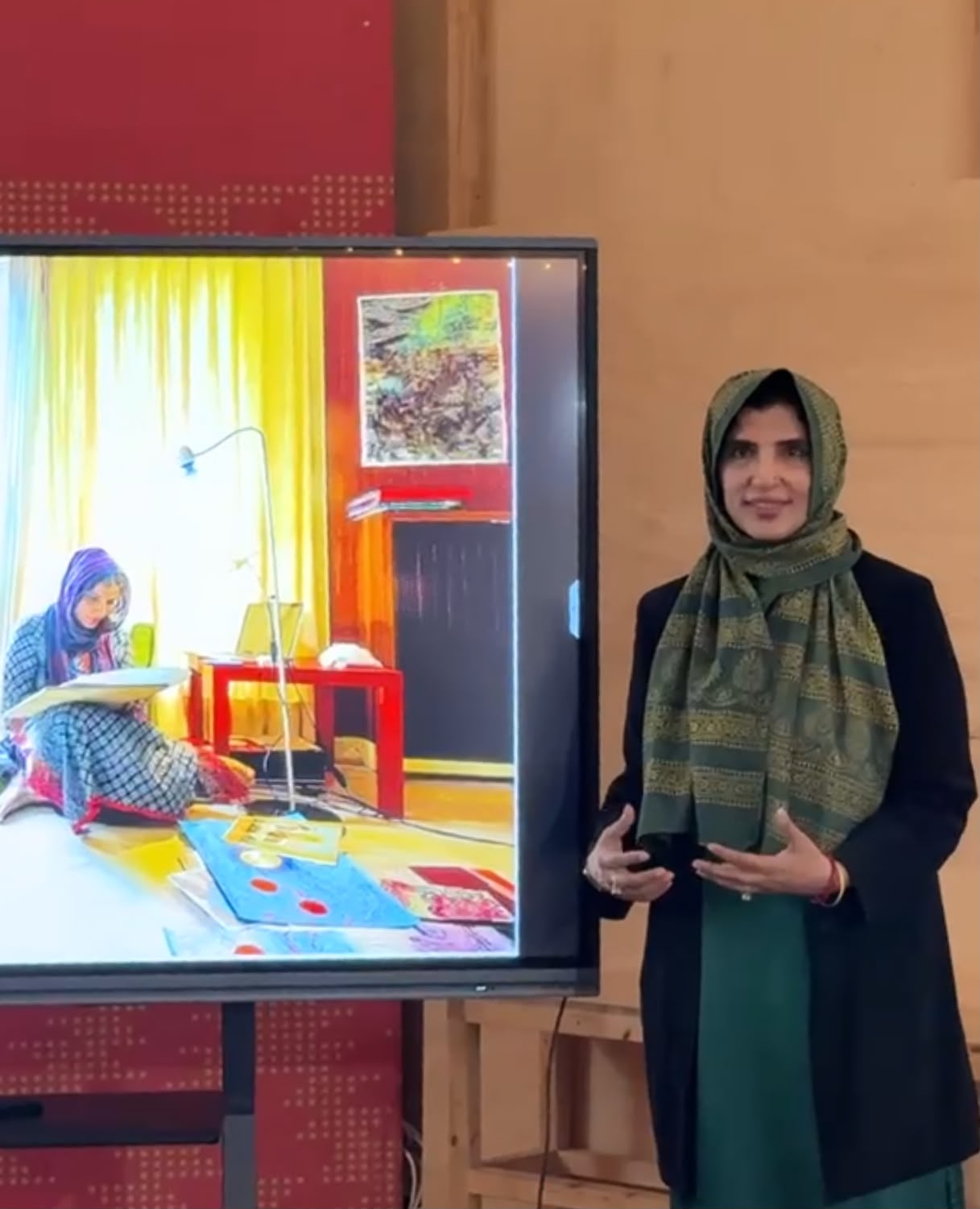
In Rana’s work, nature is not a passive backdrop but a narrative voice. On hand-prepared wasli paper, she uses trees, lotus flowers, fish, eggs, and connecting dots as recurring symbols of vulnerability, resilience, renewal, and interconnectedness. The exhibition approaches climate change as both an ecological and emotional crisis, encouraging audiences to consider the relationships between human life and the natural systems that sustain it. This emphasis on interconnected vulnerability aligns with international climate assessments that examine impacts across ecosystems, biodiversity, and human communities.
“Creating awareness of climate change through art” by Farrah M. Rana
The lotus represents renewal, resilience, and transformation, while eggs evoke birth, fertility, and the continuing cycle of life. Connecting dots form an underlying visual network that links these motifs and suggests the often-unseen relationships among living beings, environments, memories, and experiences.
The project also demonstrates how miniature painting can function as a contemporary language while retaining the discipline of its historical practice. South Asian miniature traditions are known for meticulous drawing, carefully prepared paper, controlled brushwork, and layered pigment application. Rana reworks this detailed visual vocabulary into an ecological narrative in which craftsmanship becomes a means of reflection on care, coexistence, and responsibility.
“When the Leaves Speak” connects past and present, cultural tradition and contemporary storytelling. Its intimate scale and detailed imagery invite close looking while its subject expands outward to questions of collective responsibility and the fragile relationships that connect people with the natural world.
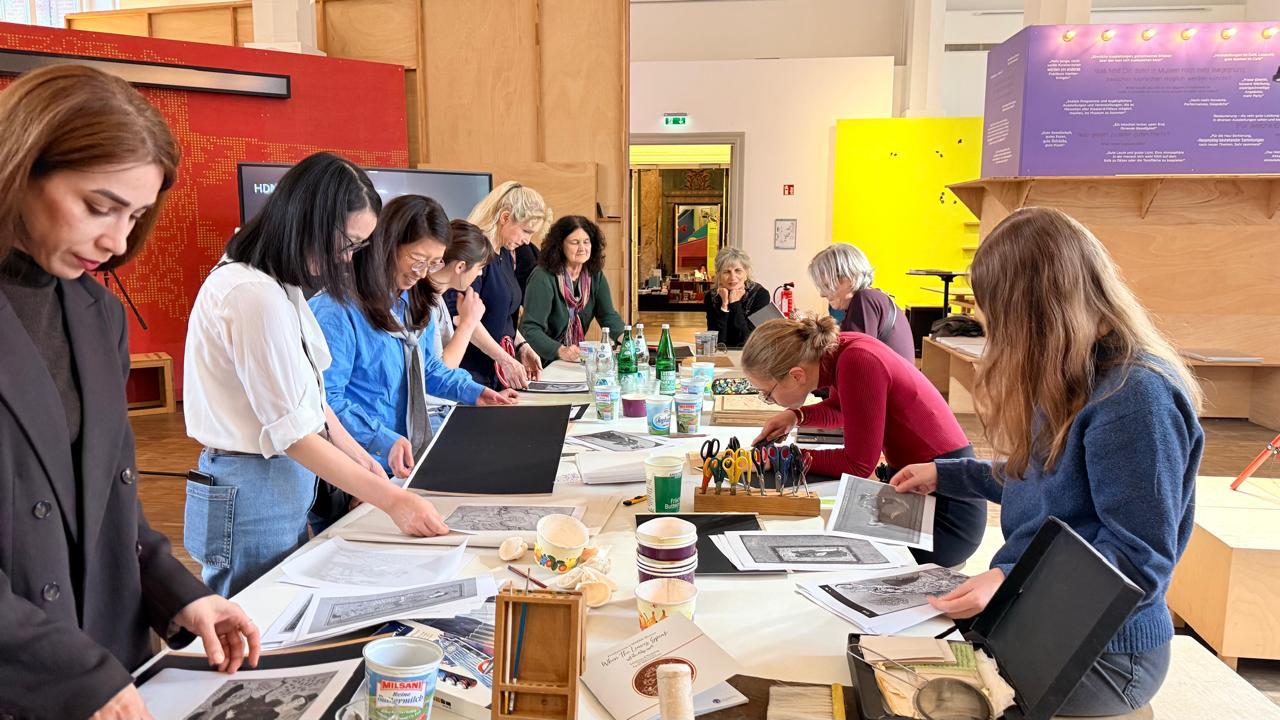
WORKSHOP AND INTERNATIONAL CULTURAL EXCHANGE
An integral part of the exhibition is a workshop led by Rana, designed to introduce participants to traditional miniature painting techniques. During the workshop, she taught the Sufaid Qalam technique, allowing participants an opportunity to work directly with the disciplined processes of South Asian miniature painting. The sessions focused on precision, patience, observation, material handling, and the detailed application of line and form, while showing how a time-honored technique can evolve through contemporary practice.
Participants came from diverse cultural backgrounds, including Kenya, China, Japan, and Iran. Their participation transformed the workshop into a space of international cultural exchange, where miniature painting became a shared point of learning and dialogue. The project therefore extends beyond the display of finished artworks: it also creates an opportunity for artistic knowledge to be transmitted through practice and encountered by an international community.
Curated by Gabriel Schimmeroth and co-curated by Dagmar Rauwald, the project brings exhibition making, artistic practice, and public learning together. Rauwald’s curatorial framework emphasizes the workshop as an immersive introduction to a sophisticated South Asian art form and recognizes the international connections through which miniature painting continues to develop.
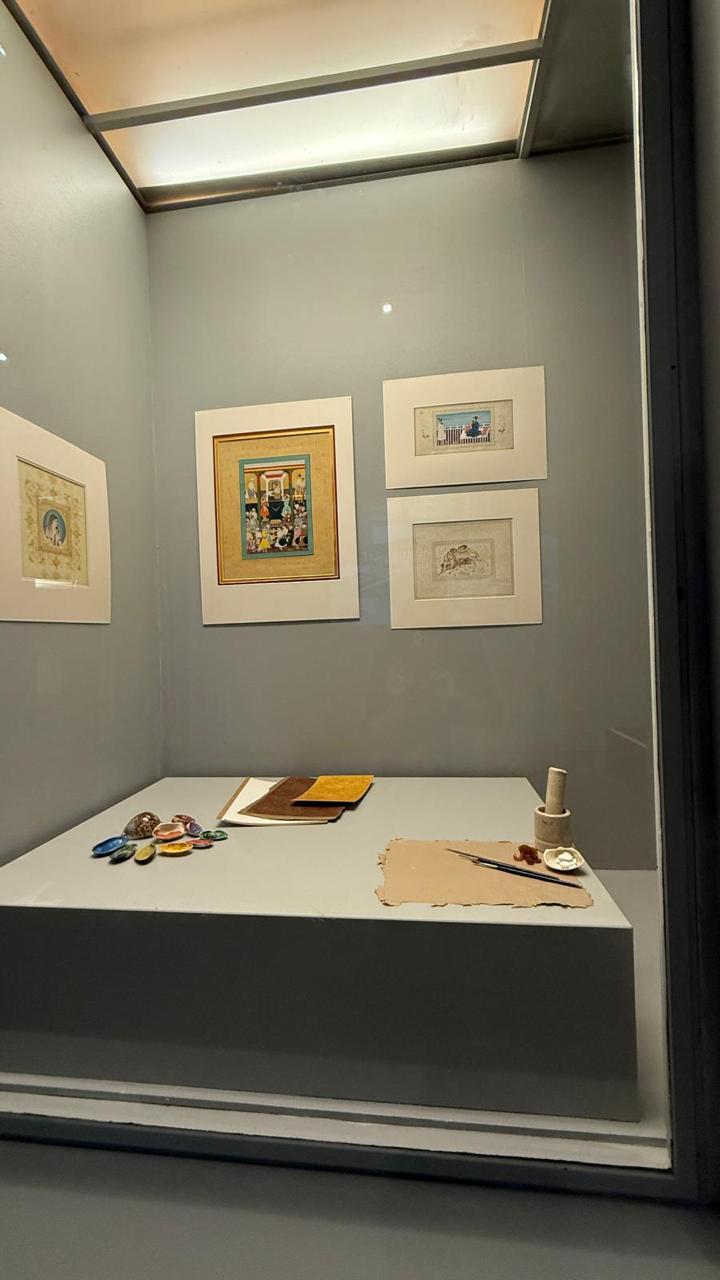
Rana’s central proposition is that trust is a living network formed through vulnerability, care, reciprocity, and shared survival. Fish, lotus motifs, eggs, trees, and connecting dots operate together as a symbolic field in which human and non-human relationships become visible. Through this layered vocabulary, the exhibition proposes that care for nature is inseparable from the relationships through which human life is sustained.
The opening takes place on 24 September 2026 at 7:00 p.m. at the Zwischenraum at MARKK – Museum am Rothenbaum, Hamburg. Workshop sessions are scheduled for 24 September 2026 at 4:00 p.m. and 1 October 2026 at 4:00 p.m. The exhibition and workshop are part of a wider cultural exchange that connects Pakistani miniature practice with an international audience in Germany. The exhibition will continue till January 2027.
About the Artist
Farrah Mahmood Rana is a Pakistani artist working with the visual and technical language of South Asian miniature painting. Her practice develops contemporary narratives around nature, memory, identity, and ecological relationships. In When the Leaves Speak, she combines traditional materials and techniques with symbolic imagery to reflect on climate change, interconnectedness, and collective responsibility.