
 E Paper

ISLAMABAD (Urdu Times) Effective Use of Modern Technology by Security Forces for Counter-Terrorism

Share
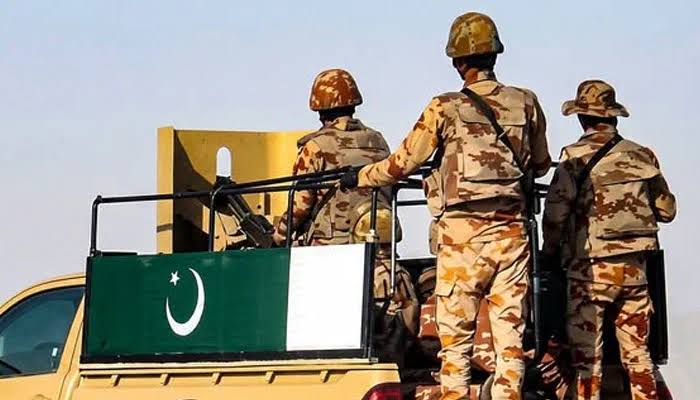
ISLAMABAD (Urdu Times) In the current era, modern technology has become indispensable to security forces’ counter-terrorism efforts. According to defence analyst Asghar Ali Mubarak, in the insurgency-hit regions of Balochistan and Khyber Pakhtunkhwa, security forces have increasingly relied on modern technology—particularly drones (UAVs) and quadcopters—as an essential and highly effective component of counter-terrorism strategy in recent years. Unlike the traditional guerrilla warfare of the past, this conflict has now evolved into “technology-driven warfare.”
To counter the evolving tactics of terrorism, security forces worldwide are relying on Artificial Intelligence (AI), drones, and state-of-the-art surveillance systems alongside traditional methods.
Key aspects of the effective use of modern technology in counter-terrorism include the following:
* Artificial Intelligence (AI) and Data Analytics/Predictive Policing: AI algorithms analyze historical data, suspicious activities, and geographical information to identify areas at high risk of terrorism.
Big Data Analysis: Security forces detect suspicious networks by filtering through millions of data points (such as banking transactions, travel records, and call data) in mere seconds.
* Unmanned Aerial Vehicles (Drones) and Robotics – Aerial Surveillance: Drones enable round-the-clock monitoring of rugged mountain ranges, border regions, and dense forests.
Targeted Operations: Advanced combat drones possess the capability to precisely strike specific terrorist hideouts without risking human casualties.
Bomb Disposal Robots: Remote-controlled robots are utilized to neutralize explosives and IEDs without endangering human lives.
Biometrics and Facial Recognition – Safe City Projects: CCTV cameras installed at city entry/exit points and sensitive locations are linked to facial recognition software, enabling the immediate identification of wanted terrorists within crowds.
Biometric Scanning: Security forces can conduct instant identity verification at check-posts using handheld biometric devices integrated with databases such as NADRA.
Cybersecurity and Digital Intelligence – Social Media Monitoring: Terrorist organizations exploit the internet for propaganda, recruitment, and fundraising. Security agencies track their online activities, Dark Web presence, and encrypted chats using advanced monitoring tools.
Blocking Financial Networks: Channels for terrorist financing are shut down through the use of blockchain technology and advanced anti-money laundering (AML) software. Modern communication and geo-fencing systems—Satellite Imagery: Live satellite feeds are utilized to map the suspicious movements of terrorists and locate their hideouts. Geo-fencing: In the event of a terrorist incident, a specific area is geo-fenced to instantly retrieve data on suspicious mobile phones and SIM cards present there, aiding in the identification of the masterminds. Pakistani security forces, including NACTA and the CTD, have modernized counter-terrorism operations by integrating artificial intelligence (AI), biometrics, and automated tracking systems. To monitor the movements of suspicious individuals, the Counter-Terrorism Department (CTD) employs an AI-based facial recognition system that instantly identifies wanted persons by comparing CCTV footage against criminal record databases. This digital surveillance is further bolstered by systems such as “Hotel-i” and “Travel-i,” which capture traveler and hotel data in real-time and transmit immediate alerts to command centers regarding the presence of any suspicious individuals. At the national level, NACTA actively monitors the digital space to curb online extremism, with specialized cyber-monitoring units blocking terrorist propaganda and channels used for terror financing. On the ground, security forces utilize digital tools—such as NADRA-linked handheld biometric devices at checkpoints—for the instant verification of fingerprints, while advanced ISR drones equipped with thermal imaging are being deployed in border regions and rugged terrain to conduct aerial surveillance and locate terrorist hideouts. The following details outline the security forces’ use of state-of-the-art drone technology and their associated defense strategies:
Offensive and targeted aerial strikes;
Targeting vehicles and mobile assets: The recent operation in Mastung serves as a prime example, where a moving vehicle carrying terrorists was destroyed with pinpoint accuracy from the air using a quadcopter.
This technology is proving instrumental in neutralizing terrorists hiding in remote and rugged mountain ranges without the need to deploy ground troops.
Use of heavy combat drones: According to defense reports, alongside surveillance operations, security forces are utilizing advanced Chinese-made CH-4 drones and automated aerial systems like ‘Al-Hamza,’ which possess the capability to launch missiles and remain airborne for extended periods.
Intelligence, surveillance, and real-time monitoring: Drones provide round-the-clock aerial surveillance across the vast, arid desert and mountainous regions of Balochistan (such as Nushki, Awaran, and Washuk). They enable the immediate detection of terrorist movements, attempts to set up blockades, and the location of clandestine hideouts. Search and rescue operations: To protect security force convoys on the ground from potential ambushes, drones act as “scouts” by flying ahead and providing live video feeds to ground commanders. Anti-drone technology and defensive measures: Security forces have established a robust defense line in response to the growing trend among terrorist organizations (such as Fitna-al-Khawarij and the BLA) of using inexpensive, commercial quadcopters to deliver explosives.
Drone shoot-down systems: The Pakistan Army’s air defense system has recently detected and successfully shot down multiple terrorist drones approaching from the Afghan border in Balochistan.
Ukraine-style defensive nets: To protect key installations, headquarters, and outposts from hostile drone attacks, security forces have begun installing special “defensive nets”—modeled after tactics used in the Ukraine conflict—which prevent dropped explosives from reaching the buildings. Electronic warfare and jammers: Forces are utilizing portable (handheld) anti-drone guns and electronic jamming systems that neutralize unauthorized drones by severing the link between the drone and its control station.
Specialized drone training for security forces: To counter the technological proliferation of terrorist capabilities, law enforcement agencies have established dedicated drone training schools (such as the one in Nowshera).
Joint combat exercises: Joint exercises (such as “Maiden Strike”) are being conducted between the Pakistan Army and the police, aimed at training personnel in the latest techniques for operating quadcopters and FPV drones, as well as defending against such attacks. While the integrated use of modern technology has helped minimize casualties among security forces, it has also exerted immense psychological pressure on terrorist networks, as they no longer feel safe even in their traditional hideouts.
The proliferation of commercial drone technology has created new strategic and technical challenges for counter-terrorism operations. Various non-state actors and proscribed organizations are modifying readily available consumer-grade drones—including standard quadcopters, fixed-wing models, and First-Person View (FPV) racing drones—to conduct surveillance and unconventional attacks against security installations and personnel. These modified aerial platforms are utilized for aerial reconnaissance and dropping explosives, as their small size and lightweight civilian electronics allow them to evade detection by conventional military radar systems. Furthermore, to bypass traditional electronic defense systems and jammers, these groups modify the drones’ communication signals and frequencies, enabling them to attempt operations at low altitudes and under the cover of darkness. In response to these emerging aerial threats, security forces are continuously modernizing their defensive measures. Under the current strategy, multi-layered Counter-UAS (C-UAS) systems are being deployed—incorporating electronic warfare, signal-jamming technology, and kinetic methods to destroy quadcopters in mid-air—to ensure the comprehensive protection of critical infrastructure and military personnel.While traditional intelligence and military might remain crucial in the war against terror, terrorist organizations in the modern era have altered their tactics by leveraging the internet, encrypted communications, and sophisticated financial networks. To counter this evolving landscape, Pakistan’s security agencies—such as the National Counter Terrorism Authority (NACTA), the Counter Terrorism Department (CTD), and provincial police forces—have integrated cutting-edge digital technology, artificial intelligence (AI), and biometrics into their operational capabilities. This effective use of technology is proving instrumental not only in preemptively thwarting terrorist attacks but also in dismantling their networks at the root. Regarding the role of artificial intelligence (AI) and data analytics, Pakistani security forces now possess state-of-the-art command and control centers that extensively utilize AI. The ‘Face Trace System,’ developed in collaboration with the Punjab Information Technology Board (PITB) and other entities, serves as a prime example of this. The system compares live footage from CCTV cameras installed across various cities—particularly those under ‘Safe City’ projects—against the Crime Record Office (CRO) database. As soon as a proclaimed offender or wanted terrorist comes within the camera’s view, the system identifies the individual’s face within seconds and issues an alert to security forces. Furthermore, big data tools are utilized to analyze suspicious calls, messages, and travel records, enabling the creation of a geographic map of entire terrorist networks. Automated monitoring and tracking systems—such as “Hotel Eye” and “Travel Eye”—have been introduced by the Counter-Terrorism Department (CTD) and the police to monitor terrorist movements and expose their hideouts. These systems monitor data from hotels, guesthouses, and inter-provincial transport terminals in real-time. Whenever a suspicious individual or wanted criminal books a room or attempts to travel using their identity card, the “Hotel Eye” system immediately alerts the relevant CTD cell. This automated system has made it extremely difficult for terrorists to go into hiding within cities or move from one location to another. Addressing cyberspace and digital terrorism: Terrorist organizations today utilize social media and the dark web to disseminate propaganda, radicalize the youth, and raise funds. Under the National Action Plan, NACTA’s cyber monitoring wing keeps a close watch on such content across the internet. Advanced web crawlers and monitoring tools are employed to block websites and social media handles that promote hatred, extremism, or terrorism. Additionally, Countering Terrorist Financing (CFT) units utilize advanced financial software to monitor banking channels, mobile wallets, and Hawala-Hundi networks, aiming to cut off financial lifelines to terrorists. Regarding biometric integration and field operations, Pakistani forces now employ biometric handheld devices linked to NADRA to ensure accurate identification during field operations and security checkpoints. In the past, terrorists could evade security posts using forged identity cards; however, on-the-spot fingerprint verification now reveals their true identities within seconds. This technology has proven highly effective in apprehending actual perpetrators while sparing innocent civilians from unnecessary inconvenience during Intelligence-Based Operations (IBOs) and search operations. As for aerial surveillance and drone technology, security forces are utilizing ISR drones in Pakistan’s border regions, mountainous terrain, and rugged areas—such as parts of Khyber Pakhtunkhwa and Balochistan—where ground-based surveillance is challenging. These unmanned aerial vehicles (UAVs) are equipped with advanced thermal imaging and night-vision cameras, enabling them to detect human movement and concealed hideouts even in the darkness of night or within dense forests. Before launching any operation, ground forces devise their strategy using live feeds from these drones, a practice that has minimized casualties among security personnel. The integrated use of modern technology by Pakistani security forces—facilitated through platforms like NACTA and the CTD—has transformed conventional warfare into an intelligent, digital defense system. Although challenges persist, this effective combination of artificial intelligence, biometrics, cyber monitoring, and aerial surveillance has severely curtailed the operational scope of terrorists and is proving to be a significant milestone in making Pakistan safer.In recent days, security forces in Balochistan have conducted successful intelligence-based operations (IBOs), killing numerous terrorists and inflicting severe damage on their networks. Joint operations involving security forces, law enforcement agencies, and the Counter-Terrorism Department (CTD) are proceeding with full intensity across various districts of the province under the “Azm-e-Istehkam” and “Operation Radd-ul-Fasaad” frameworks. Details of the most significant recent operations are as follows:
Mastung and Pishin Operations (September 14, 2026) – Mastung Quadcopter Strike: Utilizing advanced technology, security forces targeted a vehicle belonging to terrorists in Mastung district using a quadcopter (drone). Three terrorists affiliated with “Fitna-al-Hind” (including a key commander named Naqib) were killed, and their vehicle was destroyed in this operation.
Pishin (Saranan) CTD Operation: The CTD conducted a covert operation in the Saranan area of Pishin; a fierce exchange of fire resulted in the deaths of six suspected terrorists and injuries to four security personnel. A large quantity of weapons was recovered from their possession. Operations in Kharan and Washuk
Kharan Roadblock Attempt Foiled: Terrorists from “Fitna-al-Hind” attempted to set up a blockade in Kharan to disrupt public traffic. Security forces responded immediately, killing eight terrorists on the spot.
Destruction of Hideout in Washuk: The very next day, a raid was conducted on a terrorist hideout in Washuk, where three additional terrorists were killed during an exchange of fire. Security forces seized 2.9 tons of explosive material—used in the manufacture of improvised explosive devices—during major operations in Quetta, Kalat, and Sibi (early September). According to the Pakistan Army’s Inter-Services Public Relations (ISPR), security forces conducted simultaneous operations in the Shaban (Quetta), Kalat, and Sibi areas as part of a coordinated campaign. Four terrorist hideouts were destroyed, and 26 terrorists were killed in the Shaban area on the outskirts of Quetta; several terrorists were also eliminated in Kalat and Sibi. Security sources and military leadership maintain that any foreign-backed attempt to sabotage peace and stability in Balochistan will be crushed with an iron fist, and these targeted operations will continue until the last terrorist is eliminated from the province.