
 E Paper

ISLAMABAD (Urdu Times) Indian water aggression was declared a ‘declaration of war.’ Water is our lifeline .

Share
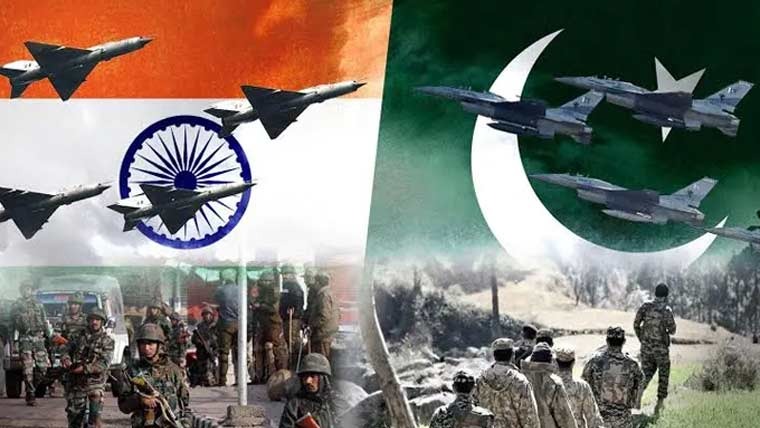
ISLAMABAD (Urdu Times) Pakistan is an agricultural country, where millions of people live on the rivers that flow from the valleys of Kashmir and irrigate Pakistan.
But India, which is not only an occupier but has also become a water terrorist, is trying to cut off Pakistan’s jugular vein by building dams on these rivers.
“This war will be on water, and the battlefield will be Kashmir!” — This prediction of Dr. Israr Ahmed is proving true today!
Dr. Israr Ahmed had said, “The war between Pakistan and India will be on water, and the battlefield will be Kashmir!”
This sentence is not just a warning today but a living reality. The Baglihar Dam (on Chenab), the Kishanganga Dam (on Neelum), and projects like Ratle, Pakal Dil, Kalnai — all these are India’s water aggression.

Kashmir is Pakistan’s water jugular vein. If it remains in the enemy’s possession, then Pakistan will become a desert.
The enemy India is showing a false face to international organizations today to stop Pakistan’s water. The water dispute between Pakistan and India is a complex issue that has become a major source of tension between the two countries.
Pakistan has declared any attempt to suspend its share of water under the agreement as a ‘declaration of war’. “Any attempt to suspend water will be considered a declaration of war” is actually a stern warning from Pakistan to India, especially when there is a change in the flow of water in rivers like Chenab, because Pakistan considers it a violation of the Indus Waters Treaty and an attack on its rights, and it means combating the use of water as a weapon which can create a major conflict, If either country wants to withdraw from the Indus Waters Treaty unilaterally, it cannot withdraw, there is scope for withdrawal from any agreement under the Vienna Convention but it does not apply to the Indus Waters Treaty,
Even if this agreement is somehow broken, there are international conventions, rules, and principles that protect the water interests of countries. Pakistan has protested against these actions of India and has sought an explanation through its Indus Water Commissioner.
Pakistan maintains that India is undermining the Indus Waters Treaty. The Indus Waters Treaty was signed between India and Pakistan in 1960, under which the formula for the distribution of river waters was agreed upon. In recent years, and especially until January 2026, the following important developments have taken place in this dispute. Some of the important points of this agreement are:
Water Distribution: Under the agreement, 19.48 percent of the river water has been given to India and 80.52 percent to Pakistan.
Western River: Pakistan has the majority rights over the Indus, Jhelum, and Chenab.
Eastern River: India has exclusive rights over the Sutlej, Beas, and Ravi.
Dispute Resolution: A joint committee has been formed under the agreement to resolve disputes.
India’s responsibility: India is obligated to inform Pakistan about the amount and timing of water allocation under the agreement.
Under this agreement, Pakistan has water rights from the Indus River system; India is unilaterally violating the Indus Waters Treaty, which is affecting Pakistan’s water rights. Pakistan has expressed concern about India several times and has raised this issue at the international level.
Pakistan has said that it will take all necessary steps to protect its legitimate rights under the Indus Waters Treaty. According to the Foreign Office spokesperson, we reject the Indian Foreign Minister’s statement regarding Pakistan; Indian allegations are irresponsible. India is once again trying to divert attention from its role in terrorism and regional instability. India’s role in promoting terrorism in the region is documented and clear; the Kulbhushan Jadhav case is a clear example of state-sponsored terrorism against Pakistan. According to the Foreign Office spokesperson, the Indus Waters Treaty is an international agreement concluded in good faith. Unilateral violation of the Indus Waters Treaty will harm the stability of the region. The spokesperson clarified that Pakistan will take all necessary steps to protect its legitimate rights under the Indus Waters Treaty. There are serious allegations of target killings, sabotage, and supporting terrorist networks abroad. Hindutva ideology promotes extremism and violence. Indian behavior is a reflection of this thinking. India’s illegal and oppressive military occupation of occupied Jammu and Kashmir continues, and Pakistan will continue to provide full political, moral, and diplomatic support to the struggle of the Kashmiri people for their right to self-determination. Remember that in April 2025, India had announced the temporary suspension of the Indus Waters Treaty after the “Pahalgam attack”. In January 2026, Pakistan rejected this Indian move, calling it a violation of international law and reiterated its commitment to protect its rights. Pakistan has strongly protested India’s approval of the 260 MW “Dilhasti Stage-II” hydropower project on the Chenab River in occupied Kashmir. Pakistan maintains that India did not provide prior notification about the project, which is a clear violation of the agreement. The dispute over the Kishanganga and Ratle projects has been going on for a long time. India has activated the Kishanganga project, while Pakistan objects to its design.
The Ratle project under construction on the Chenab River is expected to be completed in May 2026, which Pakistan fears could reduce water flow by up to 40 percent.

The Permanent Court of Arbitration in Hong Kong ruled in Pakistan’s favor in June 2025, saying that India cannot unilaterally suspend the treaty. Pakistan has welcomed the recent ruling. The court said that the ruling does not affect the jurisdiction of the court. The court added that the Indus Waters Treaty “does not contain any provision for its suspension nor can any party unilaterally stop the process of dispute resolution.” The court also said that although India is declaring the treaty “suspended,” it is the court’s responsibility to proceed with the arbitration proceedings in a timely, effective, and fair manner. In September 1960, India and Pakistan reached an agreement on the sharing of the waters of the Indus River and its tributaries after nine years of negotiations mediated by the World Bank. What was the basin agreement? The main objective of this treaty was to distribute the water of the rivers of the Indus Valley fairly between the two countries. Since then, this river-sharing agreement has remained in place for 65 years despite several wars, differences, and disputes. However, in April this year, India announced the suspension of the Indus Waters Treaty in the wake of the Pahalgam incident. In December 2025, Pakistani officials reported that due to India’s water retention and storage, the flow of water in the Chenab and Jhelum rivers had decreased by 90 percent, posing serious threats to agriculture and the economy. Prime Minister Shehbaz Sharif said that the court’s decision has strengthened the Pakistani narrative that India cannot unilaterally suspend the Indus Waters Treaty and that ‘water is our lifeline.’ India and Pakistan signed the Indus Waters Treaty in September 1960 after nine years of negotiations mediated by the World Bank for the distribution of water from the Indus River and its tributaries. Under this agreement, India was given complete control over the waters of the Beas, Ravi, and Sutlej rivers, while Pakistan was given control over the waters of the three western rivers, Indus, Chenab, and Jhelum, but Pakistan has the right to 80 percent of the water of these rivers. India has the right to generate electricity from the flowing water of the western rivers, but it cannot build projects to store water or reduce its flow. On the contrary, it has the right to build any kind of projects on the eastern rivers, namely Ravi, Beas, and Sutlej, to which Pakistan cannot object. A permanent Indus Commission was also established under the agreement, which also works to resolve any controversial project; however, if the commission cannot find a solution to the problem, then, according to the agreement, the governments will try to resolve it. In addition, the agreement also provides for the possibility of seeking expert assistance or going to an arbitration court to resolve disputes. The main obligations of the two countries under the Indus Water Treaty include holding a meeting of the water commissioners of both countries at least once a year, sharing data on water flow in the rivers, and conducting inspection visits by inspection teams of other countries to projects on the rivers on both sides. The Indus Water Commissioners of both countries usually hold this meeting in the month of May, and their annual report is submitted to the governments of both countries on June 1.
It should be noted that this is not the first time that India has talked about using the Indus Water Treaty as a ‘weapon’. As the conflicts between Pakistan and India have increased over the past few years, so have the talks of breaking the Indus Waters Treaty. In the last two decades, especially during the BJP’s rule, the government’s position on the Indus Waters Treaty has become increasingly tough. In 2001 and 2002, when the situation between India and Pakistan became tense, India’s Water Resources Minister Bijoy Chakraborty had said that India could take several steps to put pressure on Pakistan and that if it decided to end the Indus Waters Treaty, Pakistan would be hit by drought and the people there would have to beg for every drop of water. In 2016, after the militant attack on an army camp in Uri, a review meeting of the Indus Waters Treaty was held, in which Prime Minister Narendra Modi referred to the treaty and said that ‘blood and water cannot flow together.’ In 2019, after the Pulwama attack, Union Minister Nitin Gadkari stated that India had decided to stop the distribution of water going to Pakistan, and in August 2019, Water Resources Minister Gajendra Singh Shekhawat said that ‘work has already begun to stop the flow of water going to Pakistan without violating the Indus Waters Treaty.’ After this, in August 2024, India sent a notice to Pakistan demanding government-level negotiations for ‘review and modifications’ of the treaty under Article 13(3) of the Indus Waters Treaty. The notice also mentioned cross-border terrorist activities in the demand for review. This was not the first time that the Indian government had called for a review of the treaty signed in 1960. There has been a demand for changes in. Two years ago, India had sent a notice to Pakistan in this regard, but it only mentioned discussions on ‘changes’. However, in August 2024, along with changes, there was talk of ‘reviewing’ the agreement. India and Pakistan signed the Indus Waters Treaty in September 1960 after nine years of negotiations mediated by the World Bank for the distribution of the waters of the Indus River and its tributaries. At that time, Indian Prime Minister Jawaharlal Nehru and the then head of state of Pakistan, General Ayub Khan, signed the agreement in Karachi, and it was hoped that this agreement would bring prosperity to the farmers of both countries and would guarantee peace, goodwill, and friendship. This agreement on the distribution of rivers has remained in place despite many wars, differences, and disputes. Under this agreement, India was given complete control over the waters of the Beas, Ravi, and Sutlej rivers, while Pakistan was given full control over the waters of the three western rivers, Indus, Chenab, and Jhelum. However, Pakistan has the right to 80% of the waters of these rivers. India has the right to generate electricity from the flowing water of the western rivers, but it cannot build projects to store water or reduce its flow. On the contrary, it has the right to build any kind of projects on the eastern rivers, namely Ravi, Beas, and Sutlej, to which Pakistan cannot object. A permanent Indus Commission was also established under the agreement. The problems with this agreement began when India started building hydroelectric projects on the western rivers. Pakistan was concerned that these projects would reduce the flow of water to it. Experts from both countries resolved the Salal Dam dispute in 1978. Then the Baglihar Dam issue came up and was resolved in 2007 with the help of an impartial arbitrator appointed by the World Bank. The Kishanganga project was also a controversial project. This matter reached the International Court of Arbitration and was decided there in 2013. The Sindh Commission meetings played an important role in resolving these disputes. Some of Pakistan’s concerns about these projects are justified. India is trying to bring drought to Pakistan by reducing the flow of water from the Indus.
Many people who do not know deeply feel that since 80 percent of the water of these rivers goes to Pakistan, this agreement is not in India’s favor, and it should be canceled or a new agreement should be made.
This agreement was made with great thought; the division of rivers, their hydrology, their flow, where they are going, how much water they contain, all of these were taken into account.
On the notice sent by India regarding the review of the Indus Waters Treaty, Pakistan said that this agreement is a precedent in terms of water distribution, and while it itself is committed to implementing it, it also expects India to remain committed to it.
The Indus Waters Treaty is an important agreement that has been useful for both Pakistan and India over the past several decades.
This agreement is a benchmark for bilateral agreements on water sharing, and Pakistan is fully committed to its implementation. And we hope that India will also remain committed to this agreement.
India sent a formal notice to Pakistan on September 20, 2024, under Article 13(3) of the Indus Waters Treaty, which talked about government-level negotiations for ‘review and modifications’ to the agreement.
This is not the first time that India has sent a notice to Pakistan two years ago, but it only mentioned discussions on ‘modifications’.
Pakistan’s Deputy Prime Minister and Foreign Minister Ishaq Dar says that ‘illegal and irresponsible’ Indian behavior can lead to a humanitarian crisis inside Pakistan.
Pakistan has also sought an explanation from India on the change in the flow of the Chenab River and accused India of continuously trying to systematically weaken the Indus Waters Treaty.
Ishaq Dar said that he wanted to draw attention to a situation that is causing the South Peace and stability in Asia are at risk. “We witnessed India’s unilateral suspension of the Indus Waters Treaty in April this year, but now what we are seeing are violations by India, which strike at the heart of the Indus Waters Treaty and not only threaten regional stability, but also violate the sanctity of international law.” We have twice witnessed unusual, sudden changes in the flow of the Chenab River. “These changes in the flow of water are of great concern to Pakistan as they indicate a unilateral release of water into the Chenab River by India. India released this water without any prior notice and has not shared any data or information with Pakistan under the treaty. He added that India’s recent action “clearly illustrates the weaponization of water, to which Pakistan has been constantly drawing the attention of the international community.” “India’s water manipulation poses a direct threat to the lives and livelihoods of our citizens as well as to food and economic security.

Pakistan expects India to respond to the questions of the Indus Water Commissioner and refrain from any unilateral manipulation of the river flow, and fulfill all its obligations under the provisions of the Indus Waters Treaty in the full spirit. India continues to build illegal dams in disregard of its obligations under the treaty. With the construction of dams, India’s capacity to store and manipulate water is also increasing, which is threatening Pakistan’s security, economy, and the livelihood of 240 million people. India had stopped sharing information, hydrological data, and joint monitoring required under the treaty, which has left Pakistan suffering from floods and droughts. Such illegal and irresponsible Indian behavior has the full potential to trigger a humanitarian crisis in Pakistan. He further said that the ongoing water manipulation by India is a violation of international and humanitarian laws. If India is allowed to violate the treaty and obligations, then “we are setting a very dangerous precedent.” Earlier, the Foreign Ministry spokesperson had said that Pakistan’s Indus Water Commissioner had contacted his Indian counterpart to seek clarification under the procedure laid down in the Indus Water Treaty. Any manipulation of the river flow by India, especially at a critical time in our agricultural cycle, poses a direct threat to the lives and livelihoods of our citizens as well as food and economic security. Remember that India has approved the Dilhasti Stage II Hydropower Project on the Chenab River in occupied Jammu and Kashmir in blatant violation of the Indus Waters Treaty. This development comes at a time when India has suspended the decades-old Indus Waters Treaty with Pakistan following the attack in Pahalgam in April this year. The Expert Committee on Hydroelectric Projects admitted during its meeting that although the water of the Chenab River basin was divided between India and Pakistan under the Indus Waters Treaty of 1960 and the initial parameters of the project were also decided in the light of the same treaty, the situation has now changed. The panel clearly wrote that the Indus Waters Treaty is suspended from April 23, 2025. After this, India is now working rapidly on water reservoirs and power projects in the region.
It should be noted that as long as the Indus Waters Treaty was in force, Pakistan had rights over the Indus, Jhelum, and Chenab rivers, while India was given the right to use the waters of Ravi, Beas, and Sutlej. The Indian government has given final approval to the Dilhasti Stage II Hydropower Project on the Chenab River. Pakistan has serious reservations about this project, as it will be built in Jammu and Kashmir, which is illegally occupied by India. Experts say that the Dilhasti Stage II project could prove to be detrimental to Pakistan in terms of defense and strategy, as the Chenab River is among the rivers that fall under Pakistan’s jurisdiction. The construction of this project is against the spirit of the Indus Waters Treaty. The existing structure of the Dilhasti Stage I will be used in the Dilhasti Stage II project. The 390 MW Dilhasti Stage One project was completed in 2007 and is running under the Run of the River Scheme. The same dam, reservoir, and power intake will be used in the new phase.
Pakistan has expressed concern over the change in the flow of the Chenab River and said that a letter has been written to India seeking clarification on the matter. Referring to the ‘sudden change’ in the flow of the Chenab River, Foreign Office spokesperson Tahir Hussain Andrabi said that the matter has been in the news for the past week. The media has reported that India has released water into the Chenab River. Pakistan views these changes with utmost concern and seriousness, as they indicate unilateral release of water into the Chenab River by India without prior notice. Our Indus Water Commissioner has written to his Indian counterpart in accordance with the procedure laid down in the Indus Waters Treaty, seeking clarification. Any tampering with the flow of the river by India, especially at a critical stage of the agricultural cycle, is a grave violation of the rights of the people of Pakistan. But, directly threatens the lives, livelihoods, food security, and economic security of our citizens. They demanded that India answer the questions raised, refrain from any unilateral interference in the flow of the river, and fulfill its obligations under the Indus Waters Treaty in word and deed. The Indus Waters Treaty is a ‘binding international agreement’ that has been a ‘source of peace, security and stability in the region’. Violation of the treaty threatens the sanctity of international agreements and observance of international law and also seriously undermines regional peace, the principles of good neighbourliness, and the norms of relations between states. The international community should take notice of India’s continued violation of a bilateral agreement and advise India to adopt a responsible attitude, act in accordance with international law, recognized principles, and its obligations. Pakistan is committed to the peaceful resolution of disputes and issues with India; however, Pakistan will not compromise on the water rights of its people.
It should be remembered that in April 2025, India suspended the Indus Waters Treaty after the Pahalgam incident in occupied Kashmir. India had blamed Pakistan for the incident without evidence.