 E Paper

ISLAMABAD (Urdu Times) China-Pakistan Information Corridor: A ‘Corridor of Truth’ – An Effective Counter to Negative Propaganda

Share
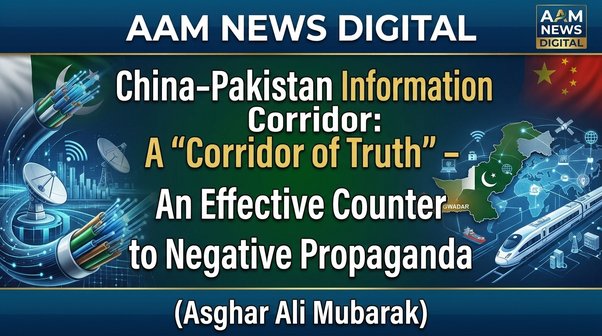
ISLAMABAD (Urdu Times) While the China-Pakistan Economic Corridor (CPEC) is transforming Pakistan’s physical infrastructure by building roads and ports, its “Information Corridor” has become more than a conduit for data transfer; it has become a “Corridor of Truth.” It serves as an effective response to global propaganda directed against this monumental project. In light of recent strategic developments, this information and digital network stands as a robust pillar for promoting fact-based information.
Both nations have adopted a joint strategy to counter the dissemination of “fake news” and fabricated narratives—such as the “debt trap” theory—circulated in international media regarding Phase-2 of CPEC. Through this Information Corridor, accurate data and authentic accounts concerning energy, infrastructure, and employment projects completed under CPEC are being presented directly to the public and the global community. The cross-border optic fiber cable, stretching from Khunjerab to Islamabad and extending further to Gwadar and Karachi, serves as the lifeline of this corridor, providing Pakistan with a secure and high-speed internet data route. This “information highway” acts as the backbone for the development of Pakistan’s IT industry, e-commerce, the introduction of 5G technology, and the advancement of cloud computing. Furthermore, through the Pak-China Media Consortium and bilateral news-exchange agreements, the economic achievements of CPEC are being highlighted in accordance with the principles of truthful journalism. Under the ‘Information Corridor’ initiative, Pakistani media workers, IT professionals, and youth are being equipped with Chinese expertise in modern digital technology and ‘smart journalism.’ In the context of the China-Pakistan Information Corridor—recently operationalized under the China-Pakistan Economic Corridor (CPEC)—media houses and journalistic delegations from both nations have reached highly strategic decisions. The primary objective is to effectively and scientifically counter the fake news and negative propaganda disseminated internationally against CPEC Phase II and the broader China-Pakistan economic partnership. While the first phase of CPEC connected the two nations through roads and physical infrastructure, the focus of these recent journalistic initiatives is to transform the ‘Information Corridor’ into a ‘Corridor of Truth,’ thereby strengthening ties at the public and intellectual levels.
As part of these decisions, a ‘Joint News Exchange Working Group’ has been established, comprising eighteen major media houses from Pakistan and China—including state broadcasters, private TV channels, and prominent Chinese institutions such as Xinhua, CMG, and the People’s Daily—to facilitate the regular exchange of verified news and factual information. Furthermore, an advanced fact-checking mechanism has been devised to promptly identify rumors and fabricated narratives. Additionally, the first regional office of this Information Corridor has been established in Karachi to enable the rapid and extensive exchange of information. Media delegations have agreed to promote not only economic affairs but also people-to-people and cultural ties through state-of-the-art media tools. As part of this initiative, a special podcast series is being launched to showcase the real-life success stories of entrepreneurs and ordinary citizens residing in both countries. Furthermore, joint research and dialogue among think tanks—spearheaded by the Pakistan-China Institute—are being expanded. It has also been decided to extensively highlight the tourism corridor between Xinjiang and Gilgit-Baltistan through media channels, with the aim of attracting Chinese tourists to Pakistan. The primary objective of these measures is to establish an ‘information corridor’ that transcends mere data sharing, instead fostering greater mutual trust between the two nations through authentic and constructive journalism. Future programs will include regular field visits and exchange programs for both young and senior journalists from both countries. Under this framework, Pakistani media delegations will visit China’s major industrial zones, agricultural farms, and high-tech smart cities to witness the model for the second phase of CPEC firsthand and report on it accurately. Similarly, Chinese media professionals will visit various economic zones in Pakistan—with a particular focus on Gwadar—to present the reality of the country’s economic development to the Chinese public. State-of-the-art media training workshops will be organized to enhance technical skills, with a primary focus on fact-checking tools, data journalism, and the constructive application of artificial intelligence (AI) in journalism. This initiative aims to enable the prompt identification and mitigation—based on scientific methods—of fabricated news circulating on social media. Concurrently, an academic partnership is being established between major media universities in Beijing and Islamabad to train young journalists in the fields of digital media and podcasting; this will include the introduction of short courses and fellowships for media students from both nations. The long-term objective of this knowledge and training corridor is to cultivate a skilled network of journalists capable of moving beyond traditional reporting—utilizing smart media tools to highlight the economic and cultural realities of the Pakistan-China relationship to a global audience with complete transparency. China-Pakistan Information Corridor will serve as a bridge connecting the hearts and minds of the people of both nations. While the China-Pakistan Economic Corridor (CPEC) acts as the backbone of Pakistan’s economy, this Information Corridor stands as a corridor of truth.
Launched to coincide with the 75th anniversary of the establishment of diplomatic relations between Pakistan and China, the China-Pakistan Information Corridor aims to foster media cooperation, enhance the exchange of information, and facilitate joint efforts to counter fake news and misleading information.
Federal Minister for Information Attaullah Tarar stated that the China-Pakistan Information Corridor will serve as a vital link between the peoples of the two countries, bringing them closer together through media collaboration, information sharing, and digital platforms. The Pakistan-China friendship has emerged stronger from every challenge, and the “iron-clad” brotherhood between the two nations stands as a unique testament to their bond—a bond that is now set to be further strengthened through digital platforms. CPEC has paved new avenues for development, particularly through its energy projects. The completion of 75 years of diplomatic relations marks a significant milestone in this historic journey of friendship; a friendship that has only grown more resilient through every trial and remains a singular example of an “iron-clad” brotherhood. Federal Minister for Information and Broadcasting Attaullah Tarar, Chinese Ambassador to Pakistan Jiang Zaidong, Chinese Foreign Ministry Spokesperson Mao Ning, and other high-ranking officials attended the event. Offering congratulations on the launch of the China-Pakistan Information Corridor, Chinese Ambassador Jiang Zaidong stated that this initiative would facilitate the exchange of information between the two nations and foster a better understanding of each other’s cultures and traditions. This project will prove instrumental in countering misinformation directed against both countries and in bridging the gaps between their respective peoples. Against the backdrop of the recently activated ‘China-Pakistan Information Corridor’—an initiative under the China-Pakistan Economic Corridor (CPEC)—media houses and journalistic delegations from both nations have reached highly strategic decisions. The primary objective is to effectively and systematically counter the fake news and negative propaganda being disseminated internationally against CPEC Phase II and the broader China-Pakistan economic partnership. While the first phase of CPEC connected the two nations through roads and physical infrastructure, the focus of these recent journalistic initiatives is to transform the ‘Information Corridor’ into a ‘Corridor of Truth,’ thereby strengthening ties at the public and intellectual levels.
Under these agreements, a ‘Joint News Exchange Working Group’ has been established, comprising eighteen major media houses from Pakistan and China—including state broadcasters, private television channels, and prominent Chinese institutions such as Xinhua, CMG, and the People’s Daily—to facilitate the regular exchange of verified news and factual information. Furthermore, a sophisticated fact-checking mechanism has been devised to promptly identify rumors and fabricated narratives. Additionally, the first regional office of this Information Corridor has been established in Karachi to enable the rapid and extensive exchange of information.
The media delegations have also agreed to promote public and cultural ties—alongside economic cooperation—by leveraging advanced media tools. As part of this effort, a special podcast series is being launched to showcase the genuine success stories of entrepreneurs and ordinary citizens residing in both countries. Furthermore, under the leadership of the Pakistan-China Institute, joint research and dialogue among think tanks are being expanded. Simultaneously, it has been decided to extensively promote the tourism corridor between Xinjiang and Gilgit-Baltistan through media channels, with the aim of attracting Chinese tourists to Pakistan. The primary objective of these initiatives is to establish an “information highway”—one that transcends mere data sharing and instead fosters greater mutual trust between the two nations through truthful and constructive journalism. In line with recent diplomatic and economic developments, Phase-2 of the China-Pakistan Economic Corridor (CPEC) has shifted its focus toward industrialization, agriculture, and the IT sector. A comprehensive overview of CPEC’s economic impact and recent progress is provided below:
…; Information Corridor and Digital Highway;…
* A Corridor of Truth: To counter negative international propaganda and “fake news” directed against CPEC, a Pakistan-China media and information corridor has been activated. This initiative aims to transparently showcase the project’s genuine economic benefits to the world.
* Cross-Border Optic Fiber: The optic fiber network connecting China and Pakistan is being expanded; this infrastructure is instrumental in laying the foundation for 5G technology in Pakistan and promoting the growth of cloud computing.
…; Special Economic Zones (SEZs);…
* Karachi and Dhabeji Economic Zone: The Dhabeji Special Economic Zone, located near Karachi, has emerged as the largest industrial hub under CPEC Phase-2, offering special incentives to the manufacturing and export-oriented sectors. Industrial Relocation: The process of relocating textile, automotive, and electronics industries from China to Pakistan has accelerated, creating extensive opportunities for local manufacturing and employment.
…; Economic Indicators and the SIFC ;..
* Record Growth in Trade Volume: China remains Pakistan’s largest trading partner and the primary source of Foreign Direct Investment (FDI). According to reports, Pakistan’s foreign exchange reserves have also stabilized, thanks to the government’s fiscal discipline and robust remittances.
…; SIFC Facilitation: The Special Investment Facilitation Council (SIFC) has expedited the investment process—covering areas such as agricultural technology, minerals (including infrastructure related to Reko Diq), and the Gwadar Port Free Zone—through a “one-window” operation.
CPEC: An Information Corridor, a Corridor of Truth
CPEC serves as the backbone of Pakistan’s economy—an “information corridor” and a “corridor of truth.” Pakistan’s primary current objective is to translate economic stabilization into sustainable development and employment opportunities; to this end, the government is leveraging the achieved macroeconomic stability to attract private sector investment. According to economic experts and government officials, improvements such as a reduction in inflation and an increase in foreign exchange reserves merely provide a foundational basis. Unless these figures are translated into the establishment of new industries and the creation of jobs, the benefits will not reach the common man. To achieve this objective and generate employment opportunities, work is underway on the following key strategies:
Under the “Uraan Pakistan” (Take-off Pakistan) program, efforts are being made to attract private and foreign investment into sectors such as agriculture, Information Technology (IT), and mines and minerals. This is aimed at enhancing national productive capacity and creating new jobs, as the private sector—rather than the public sector—possesses the greatest potential for providing sustainable employment opportunities. Furthermore, within the IT sector, millions of young people are being trained in digital skills and freelancing through the “E-Pakistan” framework. Under the Pakistan-China Information Corridor, a decision has been made to include Pakistani digital media influencers, vloggers, and YouTubers as formal strategic partners in future training and journalistic programs. The key features of this new policy are as follows:
Recognizing the growing influence of mobile journalism and social media—alongside traditional print and electronic media—it has been decided to specifically engage prominent and emerging Pakistani YouTubers and digital influencers to cover Pakistan-China diplomatic and economic relations. As part of this initiative, specialized training workshops will be organized for digital content creators, equipping them with technical skills in advanced video production, smartphone journalism, and responsible digital reporting, enabling them to produce content that meets international standards. Short- and long-term visits to China are also being arranged for these vloggers and influencers; there, they will gain firsthand exposure to China’s advanced technology, culture, and e-commerce systems, subsequently sharing fact-based information with the public in both nations via their YouTube channels and social media platforms. A primary objective of this engagement is to present the benefits of the second phase of CPEC—particularly in agriculture, industrial zones, and the digital corridor—in a simple, engaging manner that resonates with the youth. This aims to counter negative narratives surrounding the project on social media through authentic and positive vlogs. As a long-term initiative, agreements for joint content production between Pakistani and Chinese YouTubers are being established. Under this arrangement, influencers from both nations will collaborate to create documentaries and podcast series that highlight the authentic, grassroots realities of the Pakistan-China friendship for audiences worldwide. Within the framework of the ‘Pakistan-China Information Corridor,’ a structured and modern system for joint workshops has been developed, designed to allow social media experts from both countries to benefit from each other’s experiences. The key details of this collaborative training initiative are as follows:
The primary focus of these joint workshops is to foster a deeper understanding of the publishing cultures and digital markets of both nations. Pakistani YouTubers and Chinese content creators will engage in face-to-face sessions held in Beijing, Shanghai, and Islamabad. The workshops will specifically cover cutting-edge Chinese techniques in areas such as short-form video, advanced 3D animation, mobile filmmaking, and video production powered by artificial intelligence. A significant advantage of this collaboration is that it will enable Pakistani creators to gain insight into China’s unique and self-contained digital ecosystem—including platforms like Douyin, Bilibili, and WeChat—as well as the algorithms that govern them. This will empower them to tailor their content to the preferences of Chinese audiences. During the workshops, joint teams comprising creators from both countries will be formed. These teams will visit the sites of CPEC Phase II projects—such as those in the agriculture and industrial sectors—to record documentary-style vlogs and podcasts. The objective is to bridge language barriers and produce content that resonates equally well with audiences in both China and Pakistan. In the long term, these workshops will help establish a permanent Pakistan-China Digital Creators Network. This network will remain connected through ongoing online sessions, further strengthening this “corridor of truth” on social media on a global scale. Under the Pakistan-China Information Corridor, the governments and media organizations of both nations have implemented advanced technological and human-centric measures to bridge the language gap between digital creators and YouTubers. To overcome linguistic barriers, the use of Artificial Intelligence (AI)-powered real-time translation software and smart applications has been mandated; this enables creators—during workshops and field coverage—to instantly hear and view translations of each other’s speech in their respective native languages (Urdu and Chinese). Furthermore, through a collaboration between the National University of Modern Languages (NUML) and major media universities in Beijing, a specialized “Technical Media Glossary” has been developed, providing content creators with accessible translations of terminology used in videography, editing, and journalism. During joint workshops and field tours, teams of Chinese and Urdu language experts and professional interpreters remain consistently available to the digital creators, ensuring that no ambiguity arises during discussions on complex topics. On a long-term basis, short crash courses are also being introduced for selected influencers from both countries—teaching basic, everyday Chinese to Pakistani YouTubers and fundamental Urdu vocabulary to Chinese creators—thereby enabling them to connect directly with one another at a public level. The most significant initiative taken is the establishment of a joint fund dedicated to auto-subtitling and voice-over (dubbing) for all future collaborative vlogs, podcasts, and documentaries. This ensures that Pakistani content becomes instantly accessible to audiences on Chinese social media, and conversely, that Chinese content becomes readily understandable for the Pakistani public. Under the China-Pakistan Information Corridor (CPIC) framework, the weeks spanning November and December 2026 have been selected, in principle, for the inaugural, historic joint media and digital corridor tour.
This strategic tour will officially commence in the last week of November 2026 in Islamabad, where an initial group of selected Pakistani YouTubers, vloggers, and digital journalists will participate in joint sessions alongside Chinese media experts and diplomatic officials. Subsequently, in early December 2026, the tour’s pivotal field phase will begin; the joint delegation will first visit Gwadar Port and the Karachi Special Economic Zone (Dhabeji) to provide direct digital coverage of the industrial and manufacturing projects currently underway as part of CPEC Phase II. Following this, in mid-December, these Pakistani “digital ambassadors” will travel to key Chinese smart cities—such as Beijing and Shanghai—where, in collaboration with Chinese content creators, they will film a series of vlogs focusing on high-tech agriculture and digital manufacturing zones. The entire schedule has been structured to ensure that, before the end of 2026, joint videos and podcast episodes featuring influencers from both nations are simultaneously launched across all major social media platforms in Pakistan and China. These will serve as the first tangible, public-facing success of this ‘Information Corridor.’ Under the China-Pakistan Information Corridor (CPIC), a strategic delegation—comprising a total of eighteen prominent media houses from both countries—has been formed as part of a ‘News Exchange Working Group.’ The Chinese contingent includes Xinhua (the country’s official and largest state news agency); the China Media Group (CMG)—the central public broadcasting network overseeing CCTV and China Radio International; the People’s Daily (China’s most influential newspaper); and the China Economic Net (CEN), which provides specialized business coverage of CPEC-related economic projects. From the Pakistani side, the final list includes state-run entities: Pakistan Television Corporation (PTV News), Radio Pakistan (PBC), and the national news agency, the Associated Press of Pakistan (APP). Major private-sector print and electronic media houses in Pakistan—including the Jang Group (newspapers and Geo News), the Dawn Media Group (a respected English-language publishing network), and prominent private news agencies like Independent News Pakistan (INP)—along with leading private television channels such as ARY, Express, and the Hum Network, have been integrated into this information network. The objective is to facilitate the dissemination of information regarding digital initiatives and the second phase of CPEC, ensuring it is accompanied by rigorous fact-checking. These traditional media houses, in collaboration with their official digital wings and selected teams of content creators, will present joint coverage of the economic zones in both countries to a global audience—utilizing state-of-the-art formats—during the inaugural, historic visit scheduled for November and December 2026.