 E Paper
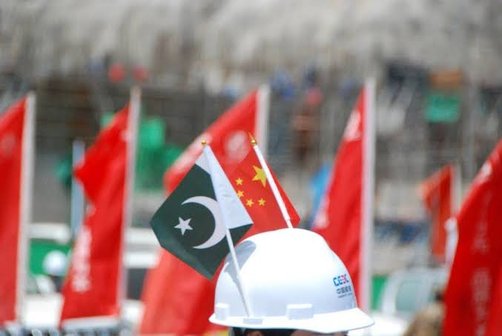
ISLAMABAD (Urdu Times) Skills Over Degrees: What Pakistan Can Learn from China

Share
Written By Ms. Laiba Zahid, a Participant of ICSF-HU Fellowship Programme 2026-2027
ISLAMABAD (Urdu Times) What is modernity in a country? Is it the technology, modern manufacturing plants, the infrastructure, the growth of industry? They’re important, but without people who have knowledge and skills in operating and developing, progress will be slower. The modernization of China has been an important reminder of the necessity of human resource development to economic and technological development. An important question to ask is what is needed for Pakistan is whether it is enough to equip young people for the demanding requirements of a modern economy through University education alone? While degrees give students the theoretical knowledge, they also must be given opportunities to use this theoretical knowledge in practice. Pakistan can take numerous lessons from China’s vocational education and skill development program.
Significant efforts to improve the linkage between education and industry have been made by China. Not only are university graduates sought after in modern industries, but they also need technicians who are trained to run machinery, to devise suitable solutions to technical issues, and to be proficient in new technologies. China’s Ministry of Education released the policy on vocational education reforms in August, 2024, among which, the cooperation in vocational schools and enterprises occurred. All such initiatives are designed to match training with the needs of industry and the region.
Vocational education teaching has also been modernized in China. In February 2025, its Ministry of Education published 758 new and updated vocational education teaching standards, which derive from the contributions of over 9,500 experts from around 4,600 institutions and organisations. The changes were made to better prepare training for the needs for industry, digitalization, technological innovation and artificial intelligence. It shows that the education system is to change and equip young students for the coming jobs.
The lesson point for Pakistan is not to abandon all university degrees and opt for a diploma in a technical field. Instead, China’s experiences illustrate the need to recognise varied educational trajectories. Industries rely on technicians and other specialized workers, while engineers and researchers require work higher grade academic qualifications. Problem solving skills, team working skills, practical working skills and adaptability are all becoming more sought after by employers. Education-employer cooperation can help fill the skills gap to work.
Pakistan is also confronted with these issues. Many families face considerable sacrifices in terms of money, to support their children’s university education. Yet there are some graduates who cannot secure employment due to practical experience or lack of job specific skills required. Business graduates may have theoretical knowledge of management, but lack management experience with projects. For instance, a graduate in information technology might not understand programming concepts but have difficulty in creating any functional applications. The level of unemployment can also reflect wider economic issues and lack of employment opportunities. However, on the job training can enhance the employment readiness of the graduates.
This challenge can be met by incorporating practical experience in the Pakistani university curriculum. Academic programmes should include internships, industry based projects, lab experiences and coursework to become part of the package of work. University staff can arrange of supervised training with companies, hospitals, research centres and public service institutions. Workers can pinpoint the skills needed on the job, provide guidance and advice, and facilitate workplace learning experiences, enabling students to become more aware of their job responsibilities.
There are institutions in place in Pakistan that could help bring about this change. The National Vocational and Technical Training Commission (NAVTTC) also collaborates with various industry actors in formulating and updating vocational training programmes. The International Labour Organization’s (ILO) 2021 Skills Development in Pakistan report also highlighted the necessity of skills development in accordance with the requirements of the labour market. Enhancing these schemes and ensure support is provided for their regular review could assist the workforce to develop their skills for the current and future needs of industry.
The right to equal access to practical education is equally a right. Professional courses or unpaid internships might be too expensive for students from rural and low-income areas. Overcoming these barriers can be achieved via scholarships, cost accessibility of programmes and through collaborations with local employers. The opportunity to participate in safe training settings, including for women, should also be equal. Furthermore, acknowledging that skills development has to go hand-in-hand with industrial development and employment growth, since there would be no employment to take up the many skills developed without an accompanying industrial growth.
It is correct that no one can replicate China’s development model as it’s a different country in different socio-economic conditions regarding its economic resources. But in case of Pakistan; a golden rule should be followed that both industry and education should grow in hand in hand. The key to modernization is not only advanced technology but also skilled people who can effectively use, maintain and improve the technology. By learning academic degrees, people gain the knowledge, and with the skills they acquire, they can put that knowledge into practice when dealing with real world problems.
In conclusion, Pakistan needs to empower and align with academic education, vocational education and industry. Combined with experiential learning, theory can be used to equip the youth for the labour market and technologization, as well as sustainable economic development. The goal should be to select skills rather than replacing degrees, choosing skills in conjunction with degrees.
References
- Ministry of Education of the People’s Republic of China. “China Advances Reform of Modern Vocational Education System.” August 1, 2024. https://en.moe.gov.cn/news/press_releases/202408/t20240802_1143883.html
- Ministry of Education of the People’s Republic of China. “MOE Unveils 758 Professional Teaching Standards for Vocational Education.” February 19, 2025. https://en.moe.gov.cn/news/press_releases/202502/t20250219_1179697.html
- National Vocational and Technical Training Commission (NAVTTC), Pakistan. “Skills Standards & Curricula.” https://navttc.gov.pk/wing/curriculum-wing/
- International Labour Organization. “Priority Actions Identified to Improve Pakistan’s Skills Development System.” May 20, 2021. https://www.ilo.org/resource/news/priority-actions-identified-improve-pakistans-skills-development-system