 E Paper
ISLAMABAD (Urdu Times) 75 Years of Pakistan-China Diplomatic Relations: Launch of the Information Corridor

Share
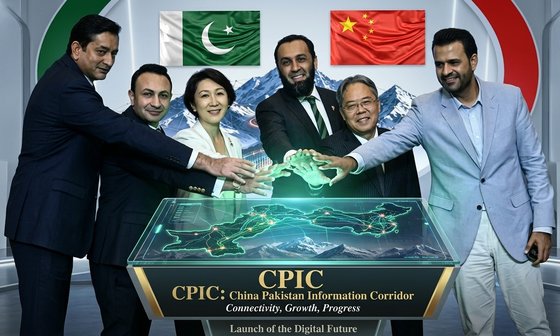
ISLAMABAD (Urdu Times) The launch of the ‘Information Corridor’—coinciding with the 75th anniversary of the establishment of diplomatic relations between Pakistan and China—is part of broader efforts to strengthen media cooperation and people-to-people ties between the two nations.
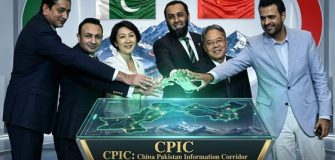
As celebrations marking 75 years of Pakistan-China diplomatic relations continue, the ‘China-Pakistan Information Corridor’ has been officially inaugurated in Islamabad. The event was attended by Federal Minister for Information and Broadcasting Attaullah Tarar, Chinese Ambassador to Pakistan Jiang Zaidong, Chinese Foreign Ministry Spokesperson Mao Ning, and other high-ranking officials. The objective of the China-Pakistan Information Corridor is to foster media cooperation, enhance the exchange of information, and facilitate joint efforts to counter fake news and misleading information.
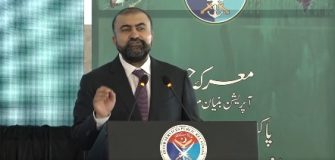
Addressing the ceremony, Federal Minister for Information Attaullah Tarar stated that this corridor would serve as a bridge connecting the peoples of Pakistan and China, bringing them closer through media, information exchange, and digital platforms. He noted that Pakistan-China friendship has emerged stronger from every challenge, and the ‘iron-clad brotherhood’ between the two nations stands as a unique example of friendship.
On this occasion, the Federal Minister for Information and Broadcasting emphasized the need to further strengthen this bond through digital platforms, adding that the China-Pakistan Economic Corridor (CPEC) has paved new avenues for development, particularly through its energy projects. Chinese Ambassador Jiang Zaidong, while extending congratulations on the launch of the China-Pakistan Information Corridor, stated that this initiative would facilitate the exchange of information and foster a better understanding of each other’s cultures and traditions. He also expressed hope that the project would prove instrumental in countering misinformation directed against both nations and in bridging the gap between their respective peoples. According to officials, the Information Corridor will promote cooperation across various sectors, including media, business, research institutions, culture, tourism, and youth affairs. A key focus of this initiative will be to disseminate authentic information to the public regarding the long-standing friendship between Pakistan and China, as well as their collaboration across diverse fields.
The second phase of the China-Pakistan Economic Corridor (CPEC) has moved beyond mere infrastructure development, shifting its focus toward industrialization, business-to-business (B2B) partnerships, and the transfer of advanced technology.
This new strategic direction has been shaped through the alignment of Pakistan’s “URAAN” (5Es) development framework with China’s modern economic model.
Under the collaborative arrangement between the Government of Pakistan and China, this new phase of CPEC has been structured into five strategic corridors:
1. Growth Corridor
* Industrial Relocation: Transferring manufacturing and industrial units from China to Pakistan and establishing joint ventures.
* Special Economic Zones (SEZs): Promoting export-led industries by operationalizing zones such as Rashakai, Allama Iqbal, and Dhabeji.
2. Innovation Corridor
* Digital Silk Road: Establishment of 5G infrastructure, fiber optics, and cloud data centers in Pakistan.
* Advanced Technology: Establishment of joint laboratories in the fields of Artificial Intelligence (AI), quantum computing, robotics, and biotechnology.
* China-Pakistan Information Corridor (CPIC): Combating misinformation through a digital highway and strategic media linkages.
3. Green Corridor
* Green Energy: Scaling up the manufacturing of renewable energy (solar and wind power) equipment in Pakistan to achieve the target of 60% clean energy by 2030.
* Environmental Resilience: Formation of joint working groups for water conservation and addressing the impacts of climate change.
4. Livelihood & Agriculture Corridor
* Modern Agriculture: Increasing agricultural output and livestock exports through corporate farming, the provision of hybrid seeds, and the development of agro-processing zones.
* Mining and Minerals: Extracting natural resources from Balochistan and other regions using modern mining techniques and transporting them to global markets (including via Gwadar Port).
5. Regional Connectivity Corridor
* Upgradation of Major Projects: Modernization of the Karachi-to-Peshawar railway track (ML-1) and the realignment of Phase II of the Karakoram Highway (KKH).
* Regional Trade Hub: Transforming Gwadar Port into a fully operational logistics hub for Central Asian countries and Afghanistan.
This new dimension of CPEC is designed to provide sustainable stability to the national economy by fostering private sector investment, boosting exports, and equipping Pakistan’s youth with future-oriented skills—including higher education in fields such as Artificial Intelligence (AI) and engineering.
Under CPEC Phase II, the Business-to-Business (B2B) partnership model has superseded the Government-to-Government (G2G) framework. This shift has facilitated landmark agreements involving billions of dollars in private-sector investment and technology transfer between the two nations. In the context of the 75th anniversary of diplomatic relations, the Special Investment Facilitation Council (SIFC), in collaboration with the Ministry of Planning and the Embassy of Pakistan in Beijing, has launched a series of “Pakistan-China B2B Investment Conferences”—spanning both domestic and international venues—which has activated a project pipeline valued at over $13 billion.The completion of 75 years (1951–2026) of diplomatic relations between Pakistan and China marks a historic milestone in the enduring, evergreen, and “iron-clad” friendship between the two nations. Formal diplomatic ties were established on May 21, 1951, and a series of special events is currently underway across the country to commemorate the “Diamond Jubilee” (75th anniversary) of this partnership in 2026. A significant development during this jubilee year is the official inauguration of the “China-Pakistan Information Corridor” in Islamabad. This initiative is part of the second phase of the China-Pakistan Economic Corridor (CPEC) and aims to strengthen media connectivity and promote strategic communication. As they mark 75 years of diplomatic relations, both nations have reaffirmed their commitment to advancing CPEC into its next phase—CPEC 2.0. The partnership now focuses on the following key areas:
* Industrial Development and Special Economic Zones (SEZs): Boosting local employment and manufacturing.
* Technology and Artificial Intelligence: Collaboration in the fields of advanced communications and IT.
* Modern Agriculture and Mining: China is providing training to over 2,000 Pakistani graduates to enhance the agricultural sector. At the beginning of this jubilee year, the foreign ministers of both countries unveiled a special, unique logo to commemorate the 75th anniversary of these diplomatic relations. • Parliamentary Solidarity: In the presence of a Chinese parliamentary delegation, Pakistan’s National Assembly passed a unanimous resolution on this historic occasion, extending congratulations to the government and people of China. A Pakistan-China cultural evening, organized by the Ministry of Information and Broadcasting in Islamabad, paid tribute to the traditions and enduring friendship between the two nations.
* Cake-Cutting Ceremonies at Airports: At the international airports in Lahore, Karachi, and Islamabad, the Pakistan Airports Authority and Chinese diplomatic officials jointly participated in cake-cutting ceremonies to mark the occasion.
This 75-year journey serves as clear evidence that, despite all the changes occurring at the global and regional levels, Pakistan-China relations have remained “higher than the Himalayas, deeper than the oceans, and stronger than steel.” Under Phase 2 of the China-Pakistan Economic Corridor (CPEC), agriculture, information technology, and the ML-1 railway project stand out as the most critical and transformative sectors—areas where the governments and private sectors of both nations are currently focusing their greatest investment and efforts. In the agricultural sector, over a thousand Pakistani agricultural experts and graduates are being sent to China for training in modern technology. Furthermore, during a recent investment conference held in Beijing, 39 commercial agreements—valued at over $1.34 billion—were signed between the private sectors of both countries for joint ventures in agriculture. Additionally, China has opened its market to Pakistan under sanitary and phytosanitary protocols, facilitating the large-scale export of Pakistani halal meat, mangoes, rice, dairy products, and seafood to China. In the information technology sector, new laboratories and research centers focused on artificial intelligence, quantum computing, and robotics are being established in Pakistan through the collaboration of China’s Global Development Initiative and the World Artificial Intelligence Cooperation Organization. Simultaneously, special training programs are being implemented to equip Pakistani youth for global digital markets, and smart technologies are being promoted via the recently launched China-Pakistan Information Corridor. Regarding the ML-1 railway project—a state-of-the-art upgrade of the 1,733-kilometer railway track stretching from Karachi to Peshawar—preparations for the commencement of ground-level work, starting from the Karachi Port, have been finalized. The most critical and advanced segment of this $6.7 billion mega-project is the stretch from Karachi to Rohri, valued at $2.5 billion; financial arrangements for this section are currently being finalized. Upon completion, train speeds will increase from 120 to 160 kilometers per hour, and Pakistan Railways’ cargo-handling capacity will expand significantly, leading to a substantial reduction in national logistics costs.
Under Phase 2 of the China-Pakistan Economic Corridor (CPEC), Pakistan’s agricultural exports are shifting from raw materials toward value-added (finished) products, with the objective of increasing the export target from $5 billion to $20 billion. China has approved over a dozen new Sanitary and Phytosanitary (SPS) protocols, opening its vast market to Pakistani halal meat, mangoes, kinnow (mandarin oranges), cherries, dairy products, and dried chilies. Rice exports, in particular, have seen a historic surge; between January and August alone, Pakistan exported approximately 373,000 tons of rice—valued at $127 million—to China, representing an increase of more than 200% compared to the previous year. Furthermore, at the Beijing Investment Conference, Chinese corporate entities signed investment agreements worth $1.34 billion for cold chain supply infrastructure, modern silos (grain storage facilities), and agro-processing zones in Pakistan. These initiatives are designed to facilitate the export of these products—featuring premium packaging—to both China and the Middle Eastern markets.
IT and Digital Training
To transform Pakistan into a knowledge economy, the second phase of the IT initiative focuses on large-scale skills development for the youth. In this regard, a program has been launched in collaboration with the Chinese company Huawei to provide world-class training in Artificial Intelligence (AI), cloud computing, and cybersecurity to 300,000 young Pakistanis.The core of ‘IT Phase II’—aimed at transforming Pakistan into a knowledge economy—is the large-scale skilling of its youth. In this regard, a partnership with the Chinese company Huawei has been launched to provide world-class training in Artificial Intelligence (AI), cloud computing, and cybersecurity to 300,000 Pakistani youths. Similarly, the Chinese tech firm ZTE is initiating a nationwide IT program for 100,000 students in Pakistan and is establishing its eighth global advanced technology training center in the country. Furthermore, the National Vocational and Technical Training Commission (NAVTTC) has entered into agreements with China for 11 vocational training programs. Under these initiatives, Pakistani students are receiving internationally recognized certificates and dual diploma degrees—issued by joint Chinese-Pakistani institutions—in fields such as e-commerce, software technology, drone applications, and intelligent manufacturing. To resolve the funding impasse surrounding the ML-1 project (Karachi to Peshawar), both nations have devised a new ‘Consortium Model’ for financing. Instead of relying solely on Chinese loans, this $7 billion project will now be funded by a consortium comprising the Asian Development Bank (ADB), the Asian Infrastructure Investment Bank (AIIB), China, and Pakistan. As part of this strategy, $2 billion in funding has already been secured from the Asian Development Bank (ADB) for the project’s first phase—the critical 480-kilometer section stretching from Karachi to Rohri. Groundbreaking for this first phase is now underway, with the consent and technical consultation of the Chinese government. Meanwhile, arrangements for the remaining sections—from Rohri to Multan and Peshawar—are being finalized; these involve a mix of Public-Private Partnerships (PPP), financing from local commercial banks, and concessional funding from China. Under the Maritime Affairs Action Plan, the pace of work has been significantly accelerated to transform Gwadar into a smart port city and a commercial gateway to Central Asia. The port’s cargo-handling capacity has seen an extraordinary increase, with the volume of cargo processed this year alone matching the cumulative total of the previous three years. The second phase (Stage-II) of the Gwadar Free Zone is being expanded across 2,200 acres, where the construction of warehouses, cold storage facilities, and logistics-related industries is progressing rapidly. Concurrently, Gwadar’s internal and external connectivity networks are being finalized through initiatives such as fully linking the Gwadar International Airport with the port, introducing an electronic data exchange system, and constructing Phase II of the Eastbay Expressway. The Rashakai Zone in Khyber Pakhtunkhwa and the Allama Iqbal Industrial City in Punjab have emerged as the primary hubs for the relocation of industries under Phase 2 of the China-Pakistan Economic Corridor (CPEC). In these zones, work is underway not only on the physical infrastructure for factories and manufacturing plants, but facilities such as tax exemptions, affordable electricity, and ‘one-window’ operations are also being provided to facilitate investors. The primary objective of these zones is to relocate Chinese manufacturers—specializing in pharmaceuticals, textiles, engineering, food processing, and home appliances—to Pakistan. Regarding land development, practical work has commenced on the construction of factories, as well as worker housing, retail areas, and state-of-the-art logistics parks. Under the new funding framework established for the ML-1 railway project, the first formal phase of ground-level work is being initiated at the Karachi Port—Pakistan’s largest maritime trade hub. This initiative aims to connect cargo from freight vessels docking at the Karachi Port directly to the national supply chain via a modern railway network. For the critical first section—stretching 480 kilometers from Karachi to Rohri—technical preparations, including land surveying, digital design of signaling systems, and plans for a comprehensive, two-way track upgrade, have been completed. This ensures that once funds become available, the track-laying process can proceed without any interruptions.
For investment in the Gwadar Port Free Zone (Phase II), local and foreign business entities—under the procedures introduced by the China Overseas Ports Holding Company (COPHC) and the Gwadar Port Authority—may register as Limited Liability Companies (LLCs) to commence operations. Entities investing in this zone enjoy a complete exemption from income tax, sales tax, and federal excise duty for 23 years. Furthermore, a 40-year tax holiday and a 100% waiver of customs duties are granted on the import of machinery, plant, and equipment required for the construction and operation of the port and the zone. Additionally, foreign investors are offered 100% ownership rights, the facility for full repatriation of profits, and the option to lease plots for a period of up to 99 years. The zone presents extensive opportunities for establishing bonded warehousing, cold storage, logistics, seafood processing, edible oil processing, electric vehicle assembly, and various other light manufacturing industries.Developed over 1,000 acres through a partnership between the China Road and Bridge Corporation (CRBC) and the province of Khyber Pakhtunkhwa, the Rashakai Zone is emerging as a major hub for the relocation of high-tech industries from China and for regional exports. Key industrial clusters established within this zone—which have been allotted land—include processing and manufacturing, home appliances, pharmaceuticals, and construction materials. Furthermore, industries related to the production of automobiles and spare parts, modern agriculture and horticulture, textiles, and steel manufacturing are being set up here; among these, the steel plant established by the Chinese corporate entity ‘Century Steel’ is particularly notable. Due to its strategic location, this industrial zone is designed to serve markets in Punjab, Khyber Pakhtunkhwa, Afghanistan, and Central Asia. Following the investment forums held in Beijing and Shenzhen, 21 joint ventures—valued at $8.5 billion—and 148 Memorandums of Understanding (MoUs) have been signed between the private sectors of both countries, covering areas such as textiles, minerals, electric vehicles (EVs), and manufacturing. Additionally, as a result of recent conferences held in Lahore and Hangzhou, Chinese manufacturers are relocating their operations to the Rashakai and Allama Iqbal Economic Zones. Among these agreements, the most notable is the local production of home appliances and Battery Energy Storage Systems (BESS). This initiative involves commercial partnerships between over 50 Chinese and Pakistani companies, aimed at promoting direct trade settlement in the Chinese Yuan (RMB) to reduce reliance on the US Dollar. The Pak-China Pharmaceutical and Healthcare B2B Investment Conference, held in Islamabad, marked a significant milestone in economic cooperation, with companies from both nations signing trade agreements totaling $1.4 billion. This includes 22 direct investment projects valued at $629.5 million, which will be implemented with the support of the Drug Regulatory Authority of Pakistan (DRAP) and the Ministry of Health. The primary focus of these agreements is the local production of life-saving vaccines, the manufacturing of Active Pharmaceutical Ingredients (APIs)—the raw materials for medicines—and advanced medical devices, as well as the establishment of a joint research hub for clinical trials, all intended to boost Pakistan’s pharmaceutical export potential. Furthermore, ICT B2B forums held in Hangzhou and Islamabad saw the participation of over 200 Pakistani and 400 Chinese companies. These forums resulted in multi-million dollar agreements across the software, fintech, and communications sectors, including a $50 million funding agreement between China Mobile and the Pak-China Investment Company. Thirty-nine Memorandums of Understanding (MoUs) have been signed under an Agri-Tech B2B framework aimed at introducing smart technology into the agricultural sector. Through these agreements, Chinese companies are collaborating with local Pakistani entities to establish joint ventures focused on the supply of hybrid seeds, advanced agro-processing plants, and cold-chain logistics. This initiative is designed to facilitate the export of halal meat, rice, and fruits—featuring modern, premium packaging—to China and the global market.