 E Paper

ISLAMABAD (Urdu Times) Kashmir Black Day – The Kashmir Issue: An Unfinished Agenda of the Partition of India

Share
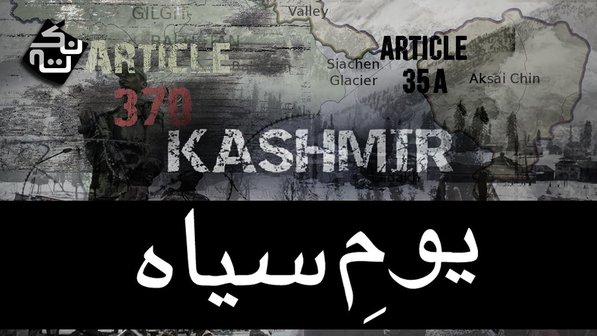
ISLAMABAD (Urdu Times) Kashmir is frequently described as an “unfinished agenda” of the Partition of India and as the “jugular vein” of Pakistan. Globally, people observe “Black Day” annually on October 27th. This day serves as a reminder of October 27, 1947, when Indian forces entered Srinagar and established an occupation—a move deemed illegal by Pakistan and Kashmiris worldwide. From Pakistan’s perspective, Kashmir represents an “unfinished agenda” of the 1947 Partition. This stance posits that, based on the principles of the Partition, Kashmir—being a Muslim-majority region—should have naturally become part of Pakistan; however, this process was obstructed by a controversial “Instrument of Accession” signed by the Hindu Maharaja. Pakistan’s position is rooted in United Nations Security Council Resolution 47 (1948), which calls for a free and impartial plebiscite, allowing the Kashmiri people to determine their own political future. Beyond shared religious and cultural ties, Kashmir is often referred to as Pakistan’s “jugular vein.” It houses a vital and strategically critical river system, which serves as the backbone for the country’s agricultural network and energy security. On this day, observed globally under the auspices of Pakistan’s Ministry of Foreign Affairs, the focus is directed toward the human rights situation in “Illegally Indian Occupied Jammu and Kashmir” (IIOJK). It highlights the ongoing military crackdown, political arrests, and the security situation that have persisted since the region’s autonomy was revoked in 2019. Each year, Pakistani diplomatic missions worldwide organize seminars, photo exhibitions, and public rallies to maintain global attention on this conflict and to advocate for the right to self-determination.
October 1947 was a pivotal and tumultuous month in the history of the subcontinent, laying the groundwork for the Kashmir issue—the most significant conflict between Pakistan and India. The following is an account of the major historical events that unfolded after the partition in August 1947:
1. The Poonch Rebellion and Atrocities in Jammu (Early October)
Immediately following the partition, a popular uprising intensified in Poonch—a Muslim-majority area within the State of Jammu and Kashmir—against the oppressive taxes imposed by Maharaja Hari Singh and the Dogra regime. During this period, under the patronage of Dogra forces, a large-scale massacre and forced eviction of the Muslim population took place in the Jammu region, compelling hundreds of thousands of Muslims to migrate toward Pakistan.
2. The Arrival of the Tribal Contingent (October 22, 1947)
In response to the atrocities committed against the Muslims of Jammu, and to assist the Kashmiri people, a contingent of Pashtun tribesmen from Pakistan’s province of Khyber Pakhtunkhwa (then known as the North-West Frontier Province) entered Kashmir. On October 22, this force—having secured control over Muzaffarabad and Domel—pushed back the Maharaja’s troops and began a rapid advance toward the capital, Srinagar.
3. Establishment of the Azad Jammu and Kashmir Government (October 24, 1947)
Following the successes of the tribal forces and local mujahideen, an interim revolutionary government was proclaimed on October 24, 1947, in the territories liberated from Dogra rule. It was named “Azad Jammu and Kashmir,” and Sardar Muhammad Ibrahim Khan was appointed as its first President.
4. The Contested Accession to India (October 26, 1947)
As the tribal forces reached the outskirts of Srinagar, a terrified Maharaja Hari Singh fled from Srinagar to Jammu. He requested military assistance from India. India stipulated that such aid would be provided only if the Maharaja signed an Instrument of Accession. Consequently, on October 26, the Maharaja signed a contested and provisional Instrument of Accession with India—a move that Pakistan and the Kashmiri people have consistently rejected, deeming it illegal and contrary to the aspirations of the people.
5. The Arrival of Indian Forces in Srinagar — ‘Black Day’ (October 27, 1947)
Using the accession as a pretext, regular units of the Indian Army landed at the Srinagar airport on the morning of October 27, 1947, and established an illegal, forcible occupation of Kashmir. The people of Kashmir and Pakistan observe this day annually as a “Black Day,” as it marks the beginning of this long-standing conflict.
6. The Outset of the First Indo-Pak War
With the arrival of Indian forces, the first Indo-Pak war formally erupted in the region. The founder of Pakistan, Quaid-e-Azam Muhammad Ali Jinnah, ordered the acting British Commander-in-Chief, General Douglas Gracey, to deploy troops to Kashmir. However, the regular army faced certain obstacles due to a “stand-down” order issued by the British commanders. Nevertheless, the conflict continued, eventually concluding in 1949 following the intervention of the United Nations and the establishment of a ceasefire line (now known as the Line of Control).On October 27, 1947, when Indian forces landed in Srinagar, the founder of Pakistan, Quaid-e-Azam Muhammad Ali Jinnah, was in Lahore. Recognizing the gravity of the situation, he issued an immediate directive to the acting British Commander-in-Chief of the Army, General Douglas Gracey, to order Pakistani forces to advance toward Kashmir (Srinagar and Jammu) via Rawalpindi and Sialkot.
General Gracey took the position that since the Maharaja had acceded to India, Kashmir was now part of Indian territory; therefore, deploying troops there would amount to a formal declaration of war against India—a step for which he required authorization from the Supreme Commander, Field Marshal Claude Auchinleck. Arriving in Lahore the very next morning, Field Marshal Auchinleck made it clear to Quaid-e-Azam that if the Pakistani army entered Kashmir, all British officers serving within its ranks would immediately resign. At this critical juncture—when the Pakistani army was still in its formative stages—this form of military blackmail placed Pakistan under severe defensive pressure. When Maharaja Hari Singh signed the Instrument of Accession, the Governor-General of India, Lord Mountbatten, accepted the agreement and addressed a formal letter to the Maharaja on October 27, 1947. This letter contained a legal condition that remains the primary argument for the disputed status of Kashmir to this day:
“It has been the policy of my government that in cases where the accession of a state is a matter of dispute, the decision should be made in accordance with the will of the people of that state. Therefore, as soon as law and order are restored in Kashmir and its territory is cleared of invaders…”
Through this letter, India acknowledged the accession as provisional and contingent upon the will of the people; however, it later reneged on this international commitment. In the last week of October 1947, while a large part of Kashmir was engulfed in war, a unique and highly successful rebellion was unfolding in the Northern Areas. Following the expiration of the British lease, Maharaja Hari Singh had appointed Brigadier Ghansara Singh as Governor in July 1947.
* The Role of Major William Brown: Major William Brown, the young British commander of the Gilgit Scouts, along with his second-in-command, Captain Babar Khan, devised a plan in coordination with local Muslim officers—driven by the fact that 99 percent of the local population wished to join Pakistan. On the night of October 31, the Gilgit Scouts surrounded the Governor’s House; on November 1, 1947, they arrested Brigadier Ghansara Singh and raised the flag of independence. They immediately sent a telegram to the Government of Pakistan, requesting that it assume administration of the region, and subsequently, on November 16, Pakistan took control. Following the outbreak of the Indo-Pakistani War in October 1947, the referral of the Kashmir issue to the United Nations (UN) marked the most significant diplomatic turning point in the conflict. Interestingly… It was not Pakistan, but India itself, that took this case to the United Nations. When the conflict in Kashmir intensified and Indian forces failed to completely push back the local mujahideen (freedom fighters), India filed a complaint with the UN Security Council (UNSC) on January 1, 1948, under Article 35 of the UN Charter. India alleged that Pakistan was providing military and logistical support to tribal raiders and demanded that the UN put a stop to this assistance. In response, Pakistan presented its case, highlighting the massacre of Muslims in Jammu, the oppressive measures taken by the Maharaja, and the illegal and contentious nature of the accession to India. Pakistan clarified that this accession had taken place against the will of the Kashmiri people.
Rather than treating the matter merely as a complaint from one country, the United Nations designated it as the “India-Pakistan Question.” On January 20, 1948, the Security Council passed Resolution 39, which established the United Nations Commission for India and Pakistan (UNCIP) to visit the region and assess the facts. The most fundamental and historic UN document regarding the Kashmir issue is Resolution 47, adopted on April 21, 1948. This resolution proposed a three-point formula for the resolution of the Kashmir dispute:
Pakistan would withdraw its citizens and tribal elements from Kashmir. Subsequently, India would also reduce its military presence to the absolute minimum level necessary to maintain peace. The final decision regarding the future of the State of Jammu and Kashmir would not be determined by military force, but through a free, fair, and impartial plebiscite (vote), allowing the Kashmiri people themselves to decide… whether they wish to join Pakistan or India. A neutral administrator was to be appointed by the UN to oversee this plebiscite. As a result of United Nations efforts, a formal ceasefire between the two countries came into effect on January 1, 1949. In July 1949, under the ‘Karachi Agreement,’ the armies established a ceasefire line based on their positions; after the 1972 Simla Agreement, it was renamed the Line of Control (LoC). The United Nations also deployed military observers (UNMOGIP) to monitor this line—a presence that continues to this day. The primary reason for the failure to implement Resolution 47 was the inability of the two nations to reach an agreement on a phased withdrawal of forces.
* Pakistan’s position was that it would withdraw its troops only if India provided a parallel schedule for the withdrawal of its own forces, ensuring that the people of occupied Kashmir could cast their votes free from any pressure.
* Despite having promised the Kashmiris the right to self-determination, India—over the course of time—rejected all international efforts aimed at holding a plebiscite.Later, displaying sheer obstinacy, India began referring to Kashmir as an “integral part” of its territory. The United Nations resolution of August 13, 1948, stipulated that Pakistan would first withdraw its forces from Kashmir. Pakistan accepted this demand; however, on March 14, 1950, the Security Council passed a resolution stating that both countries should commence the withdrawal of their forces simultaneously. The resolution of August 13, 1948, further specified that once Pakistan had withdrawn its troops and tribesmen, the local administration would assume control of the region, subject to oversight by the Commission. The resolution did not grant India permission to maintain its entire military presence there; rather, it was determined that India, too, would withdraw the “bulk of its forces” from the region, retaining only the number of troops necessary to assist the local administration in maintaining law and order. When the United Nations Commission requested a plan from both nations for the implementation of the resolution, India introduced two additional demands: first, that it be granted control over areas to the north and northwest—a move that would entail violating the ceasefire line—and second, that the institutions already established in Azad Kashmir be not only completely disarmed but entirely dismantled. This is acknowledged by Josef Korbel on page 157 of his book, Danger in Kashmir. Josef Korbel, who hailed from Czechoslovakia, served as the Chairman of the United Nations Commission (having been included in the Commission as an Indian representative). Korbel acknowledged that India’s position went beyond the scope of the United Nations resolution. Pakistan expressed its willingness to withdraw its forces from Azad Kashmir, stipulating that the number and deployment locations of the troops India intended to retain in Kashmir—as permitted under the resolution—should be disclosed to the United Nations Commission. India refused this as well. Consequently, acting on a suggestion by U.S. President Truman and British Prime Minister Clement Attlee, the Commission proposed that both nations present their respective positions to an arbitrator, who would then deliver a final verdict. According to United Nations records, Pakistan accepted this proposal, but India rejected it. India’s own representative admitted that the implementation of this UN resolution had been thwarted by India, citing “a lack of goodwill on the part of India.” To resolve the issue, the Security Council established a one-man commission, consisting of the Council’s then-President, McNaughton. This commission proposed that both nations should withdraw their forces simultaneously, ensuring that neither side faced a threat from the other. Pakistan accepted this proposal, yet India rejected it. Notably, the Security Council adopted this proposal as a formal resolution on March 14, 1950—effectively mandating that both countries begin the simultaneous withdrawal of their troops. The United Nations subsequently appointed Owen Dixon, a former Chief Justice of Australia, as its representative. He put forward several proposals for the withdrawal of forces; Pakistan accepted all of them, while the Indian Prime Minister rejected every single one. In 1951, India claimed it could not withdraw its troops, citing a perceived security threat. Australian Prime Minister Gordon Menzies proposed the formation of a joint force, which India rejected; he also suggested the creation of a local force under United Nations supervision, but India rejected that as well. They proposed sending a Commonwealth force, but India rejected this suggestion as well. The matter was referred to the Security Council. On March 30, 1951, the Security Council appointed American Senator Frank P. Graham as the new representative, stipulating that troops should be withdrawn from Kashmir within three months; it further directed that if Pakistan and India could not reach an agreement, the matter should be referred to the International Court of Justice for a ruling. Frank presented six proposals, all of which India rejected. Merely as a formality, India suggested that it would retain 21,000 troops in occupied Kashmir, while demanding that Pakistan withdraw its forces from Azad Kashmir—leaving only 4,000 local personnel, of whom 2,000 would be civilians with no affiliation to the Azad Kashmir government, and half of these would be unarmed. Graham introduced some modifications; Pakistan, while noting that the proposal was flawed, agreed to it—yet India subsequently reneged on this as well. The President of the Security Council once again proposed “arbitration” to determine which country was failing to cooperate regarding the withdrawal of forces. Pakistan agreed to this, but India rejected the proposal. In 1949, the UN Security Council appointed General McNaughton from Canada to mediate preparations for a referendum. He proposed a simultaneous, phased withdrawal of troops from both sides of the ceasefire line. Pakistan accepted the proposal with a few minor amendments, whereas India proposed numerous changes, effectively rejecting the plan. That same year, the United Nations also appointed the Australian jurist Sir Owen Dixon to mediate the dispute.In the 1950s, Loy Henderson, the American Ambassador to India, observed that if the people of the Kashmir Valley were presented with three options, they would choose an independent state. Henderson further noted that if the choice in a plebiscite were limited to either Pakistan or India, the majority of Kashmiri Muslims would vote in favor of Pakistan. The final opportunity for a plebiscite arose in 1953, when Nehru—during a meeting with Pakistani Prime Minister Muhammad Ali Bogra—verbally agreed to hold one. However, in May 1954, it was announced that Pakistan and the United States had entered into an agreement under which the Pakistani military would receive American aid. Citing this as the reason, Nehru declared that no plebiscite would take place. American Ambassador Howard Schaffer writes that U.S. President Eisenhower had also offered military aid to India, but India declined. The history of these negotiations reveals that the persistence of the Kashmir conflict is not due to any fault on the part of Pakistan; rather, it stems from Indian intransigence. In 1964, Indian Defense Minister (and former diplomat) Krishna Menon admitted to American author Arthur Bernon Tourtellot that India would not permit a plebiscite, as the people of Kashmir would vote to join Pakistan. It is not difficult to grasp the mindset of Indian leaders regarding their foreign policy; they possess a characteristically “Hindu” mentality. Nehru once wrote in praise of a Hindu philosopher known as “Kautilya” or “Chanakya.” In his book The Discovery of India, Nehru described Kautilya as a “great scholar”—a figure who advocated for the use of lies, deception, and cunning stratagems. Cunning and deceit are part of the nature of Hindus.